Gold and Classic Instant Coffee: Two Commercial Names for Two Drying Methods

Large instant coffee producers generally offer three product formats: freeze-dried, spray-dried, and agglomerated. The Brazilian company Cia Iguaçu de Café Solúvel produces all three and describes freeze-dried coffee as more expensive due to its better retention of the original flavor, making it suitable for higher-quality products.
To make the right choice, it is important to understand exactly where this difference occurs in the production line.

Shared Production Line for Gold and Classic Instant Coffee: From Green Beans to Concentrated Extract
A large part of the production line for Gold and Classic coffee is identical. Both products follow the same process up to the drying stage.
Roasting and Grinding
The process starts with a blend of green beans—Arabica, Robusta, or a combination of both, depending on the required specifications. The degree of roasting determines the color, bitterness, and aromatic profile of the extract. The roasted beans are then coarsely ground to provide controlled flow resistance in the extraction columns.
Industrial Extraction
Instant coffee extraction differs fundamentally from household brewing. Water at temperatures and pressures above normal boiling conditions passes through a series of extraction columns. Under these conditions, in addition to soluble compounds, some of the polysaccharides in the cell walls are hydrolyzed and incorporated into the extract. This is one of the factors that allows the soluble solids yield to exceed that of conventional brewing.
Aroma Recovery and Concentration
From this point, the Gold and Classic production routes diverge.
Is Gold Coffee Better Than Classic Coffee?
It depends on the application. Gold coffee (freeze-dried) generally retains more aroma and is a better choice for pure instant coffee and beverages where intense subsequent heating is limited. Classic coffee (spray-dried) is more economical and is often the more practical choice for cakes, biscuits, chocolate, and premixes, where heat exposure or particle size is an important consideration.

Classic Coffee Production Line: Spray Drying
Atomization and Drying in Hot Air
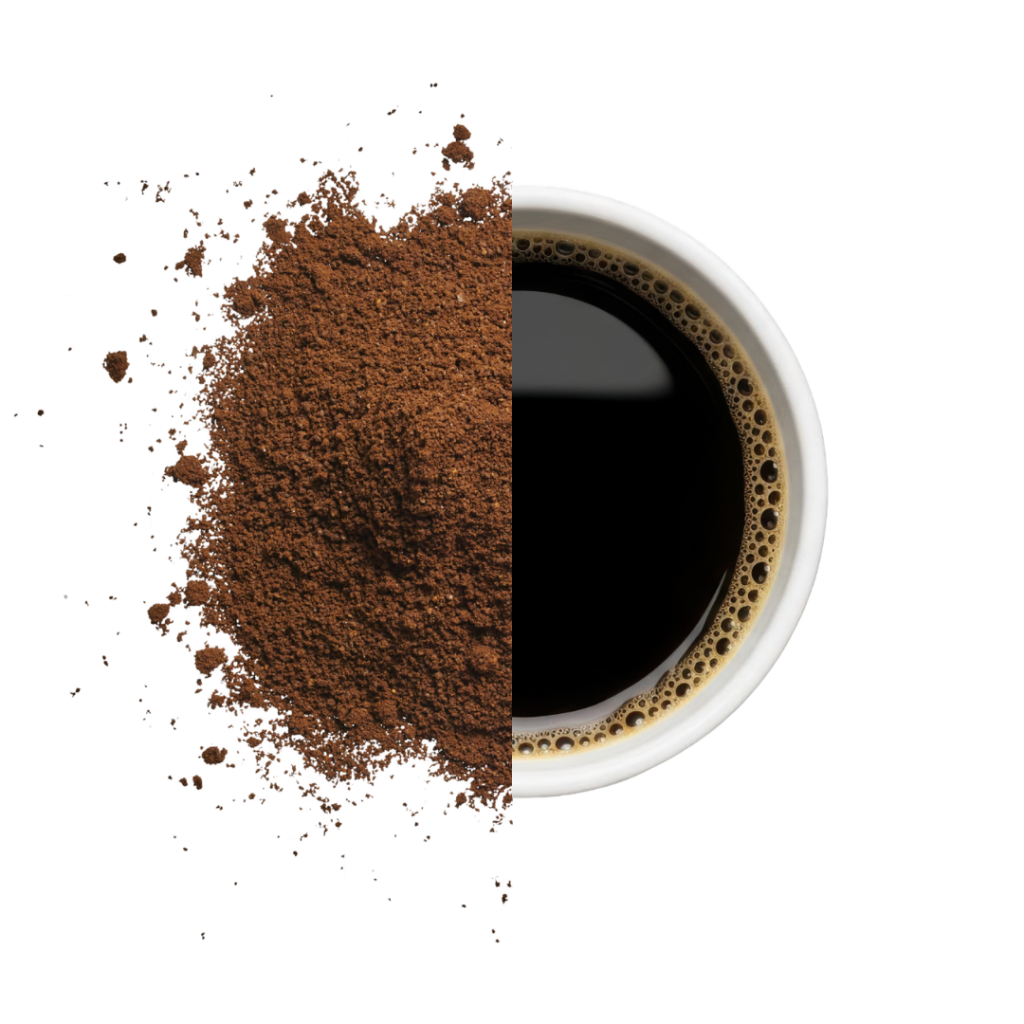
In spray drying, concentrated coffee extract is converted into very fine droplets using a nozzle or atomizer and introduced into a drying chamber through which hot air flows. The large surface area of the droplets allows water to evaporate within seconds. Rapid evaporation keeps the droplets relatively cool, so the temperature of the particles remains considerably lower than the inlet air temperature. However, the surface of the droplets is exposed to hot air during this short period, and some volatile compounds are lost along with the water vapor.
The direct product of this stage is a fine powder consisting of spherical or semi-spherical particles. A study published in Pharmaceutics comparing coffee drying methods describes spray-dried particles as smooth and spherical.
Agglomeration
Agglomerated coffee is still a spray-dried product. Its appearance may resemble Gold coffee, but any aroma lost during the spray-drying stage is not restored through agglomeration.
Gold Coffee Production Line: Freeze Drying
Freezing the Extract
Breaking and Vacuum Sublimation
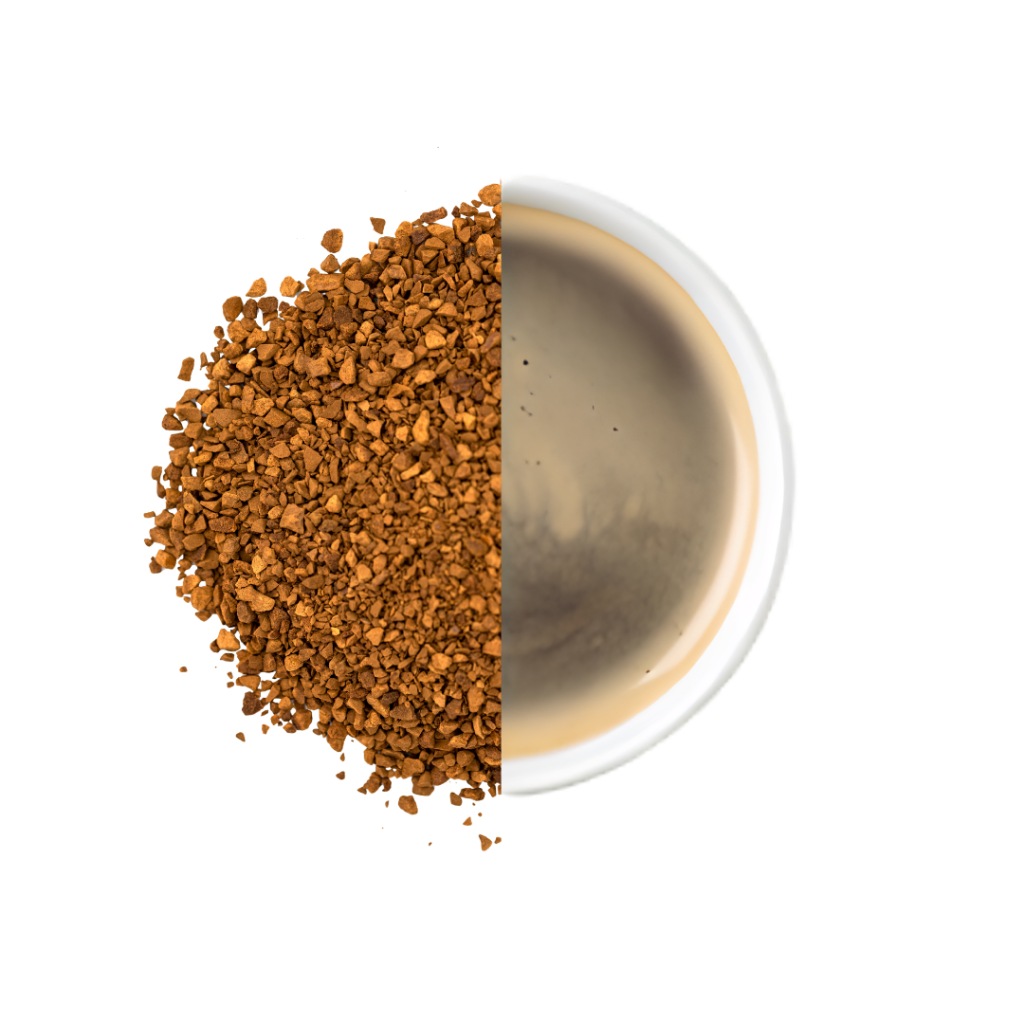
The frozen slab is broken into granules of a specified size and then sieved. The granules are subsequently placed in a vacuum chamber. Under reduced pressure, the ice changes directly from solid to vapor without melting (sublimation). The heat supplied at this stage provides the energy required for sublimation, and the product does not come into contact with hot air.
The spaces left by the ice crystals become microscopic pores. The result is an irregular, porous, and glossy granule whose shape comes from breaking the frozen slab rather than from droplets. This porous structure allows larger freeze-dried granules to dissolve rapidly in hot water.
Gold and Classic Instant Coffee Comparison Table
Feature | Gold Coffee (Freeze-Dried) | Classic Coffee (Spray-Dried) |
Water removal method | Freezing and sublimation under vacuum | Spraying into a stream of hot air |
Exposure to high heat | None | Brief, lasting a few seconds |
Particle shape | Irregular, porous, glossy granules | Fine powder with spherical particles; clustered in the agglomerated form |
Retention of volatile aroma compounds | Higher | Lower |
Production speed and capacity | Slower process, batch or semi-continuous | Continuous process with high capacity |
Production cost and price | Higher | Lower |
Typical positioning | Premium products, beverages prepared directly with water, and applications where coffee aroma is a key product characteristic | Industrial heat-processed applications, premixes, and price-sensitive products |
Does Gold Coffee Have More Caffeine Than Classic Coffee?
The drying method does not determine caffeine content. The coffee bean blend (particularly the ratio of Arabica to Robusta) and the extraction conditions are the determining factors. In the Gold and Classic Iguaçu products in SOSA’s portfolio, the declared caffeine content for both is at least 2%.

Aroma and Flavor: What Does the Research Say?
The most important quality difference between the two methods concerns the retention of volatile compounds, and this difference has been measured in research.
Two independent studies using different methods point in the same direction: freeze drying retains approximately 20 to 30 percentage points more volatile aroma compounds. These figures depend on the conditions of each production line, so direct sensory evaluation is still required when comparing two specific commercial products.
Appearance and Dissolution Behavior
Gold coffee granules are relatively large and glossy. Classic coffee is a fine, matte powder with a more uniform appearance. In retail products, glossy granules serve as a visual quality cue for consumers, and part of Gold coffee’s higher price reflects this market positioning.
Both types dissolve well in hot water. Non-agglomerated spray-dried powder may form lumps when added to the water surface, but in industrial processes where the powder is incorporated into a liquid phase using mixing or added as part of a dry blend, this is generally not a significant issue.
Both types are hygroscopic. Instant coffee is produced at low moisture levels and absorbs water when exposed to humid air, becoming sticky and forming lumps. Once opened, both types should be resealed quickly and completely.
Is Agglomerated Coffee the Same as Gold Coffee?
No. Agglomerated coffee is spray-dried powder that has been converted into larger clusters using steam. Its appearance is closer to Gold coffee and it has better dissolution properties than non-agglomerated spray-dried powder, but aroma lost during the spray-drying stage is not restored through agglomeration.
Why Is Gold Coffee More Expensive?
For an industrial buyer, the right question is not simply which one is better. The more relevant question is whether the aroma advantage of Gold coffee will remain perceptible in the final product.
Gold and Classic Instant Coffee in Industrial Applications
As the heat applied during final product processing increases, the potential loss of volatile compounds also increases. As a result, the sensory difference between Gold and Classic coffee may become smaller in the final product. However, this is an inference based on the mechanism of volatile compound loss and cannot be considered a direct result applicable to every product.
For this reason, the choice between Gold and Classic coffee is best evaluated separately for each formulation through comparative sensory testing.

Cake, Biscuits and Bakery Products
In cakes and biscuits, coffee is incorporated into the batter or dough and subsequently baked at high temperatures. Under these conditions, a substantial proportion of volatile compounds can be lost from both Gold and Classic coffee, leaving primarily bitterness, color, and less-volatile notes. For this reason, Classic coffee is generally the more economical choice in this category. Its fine powder also disperses more uniformly throughout the batter.
Chocolate and Fillings
Chocolate is an anhydrous system, and to prevent a gritty mouthfeel, its solid particles need to be as close as possible to the particle size of the chocolate mass. In this application, Gold coffee granules generally need to be milled before use, which eliminates part of their visual advantage. Classic coffee has a more suitable particle size from the outset and can be incorporated more easily during refining or added to fat-based fillings.
The low moisture content of both types, which is a maximum of 4% in Iguaçu products, is also suitable for fat-based systems. However, if the goal is to produce premium chocolate with a strong emphasis on sensory and visual characteristics, Gold coffee may be the more suitable choice.
Premixes, Coffee Sachets and Powdered Beverages
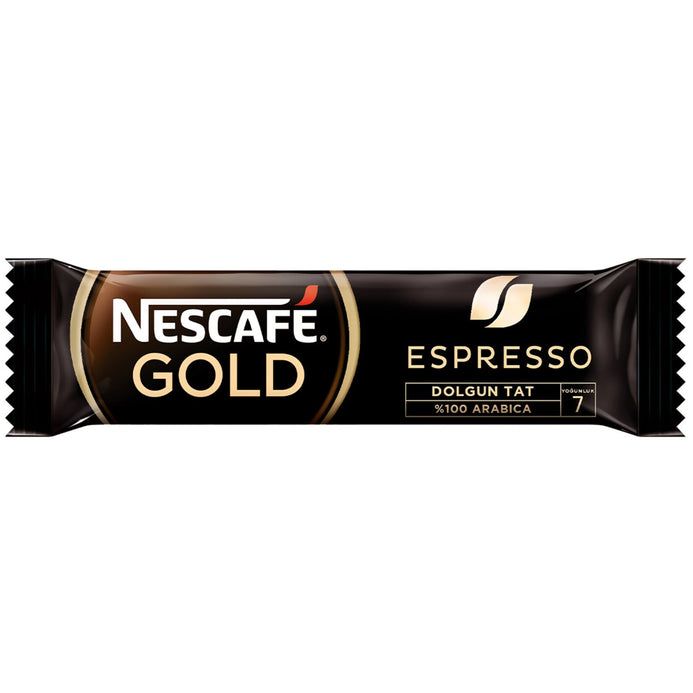
In dry blends such as three-in-one coffee or cappuccino premixes, coffee is mixed with sugar, creamer, and milk powder. Particles with significantly different sizes can segregate during transportation and vibration, resulting in inconsistent composition between sachets. Fine Classic coffee powder is closer in particle size to the other ingredients and is therefore a common choice for these applications.
Gold coffee is more valuable when the product is pure coffee or a premium “coffee-only” sachet in which the consumer can see and recognize the granules.
Ready-to-Drink Beverages and Low-Heat Applications
In beverages where instant coffee is simply dissolved in water or milk without intensive subsequent heat processing, the aroma difference between the two drying methods is most likely to remain perceptible in the final product. This is where Gold coffee can deliver its aroma advantage most directly to the consumer.
Conclusion
Gold and Classic coffee can be produced from the same extract, with the key difference being the method used to remove water. Freeze drying uses freezing and vacuum sublimation to retain more volatile aroma compounds and produces porous, glossy granules. Spray drying uses atomization in hot air to produce a fine, uniform powder at a lower cost. Published research has found that freeze-dried coffee can retain approximately 1.5 to 1.6 times more volatile aroma compounds than spray-dried coffee.
For industrial buyers, the decision depends largely on the processing conditions of the final product. The more intense the subsequent heat treatment, the less of Gold coffee’s aroma advantage is likely to remain in the finished product, making Classic coffee the more economical choice. The more directly the coffee reaches the consumer, the greater the value of Gold coffee’s aroma retention.