Low Sugar Chocolate, Which Direction Is the Market Moving Toward?

Three Roles of Sugar in Chocolate; Not Just a Sweetener
When we say that chocolate is sweet, we are actually referring to only one of the roles of sugar. In chocolate formulation, sugar performs three roles simultaneously:
Sweetness: The most obvious role, and the only role that consumers directly recognize as “sugar.”
Body and volume:
Sugar is the largest solid component in many chocolates. In dark chocolate, it typically accounts for 30 to 50 percent of the weight, while in milk chocolate it can sometimes account for nearly half of the product. This volume cannot simply be removed.
Particle structure:
Fine sugar particles, together with cocoa particles and milk particles, form the solid framework of chocolate. The size, shape, and distribution of these particles determine how chocolate melts in the mouth, what mouthfeel it creates, and how it flows on the production line.
Of these three roles, only the first can be transferred to high-intensity sweeteners. The other two require a material that is solid, provides volume, remains suspended in fat, and melts properly in the mouth. This is the main challenge of sugar-free products.

Chocolate Is a Suspension, Not a Solution
To understand the role of sugar, the physical structure of chocolate must be viewed correctly. Physically, chocolate is a suspension: very fine solid particles (sugar, cocoa solids, and in milk chocolate, milk solids) suspended in a continuous fat phase (cocoa butter). Around 70 percent of the weight of chocolate consists of these solid particles, while cocoa butter only fills the spaces between them.
This picture has several important implications. First, each solid particle must be coated with a layer of fat for chocolate to flow; the finer the particles, the greater their total surface area and the more fat is required to coat them.
The second implication is that particle size has a threshold: particles larger than about 30 micrometers are perceived in the mouth as “gritty” and coarse, while extremely fine particles increase viscosity and make the product more difficult to process on the production line.
Third, particle size distribution, meaning the ratio of fine to coarse particles, affects particle packing density and consequently texture and flow behavior.
Among these solid particles, sugar accounts for the largest share. This means that when we remove sugar, we are removing the largest part of the particle framework of chocolate. Whatever replaces it must have the same particle size, the same behavior during grinding and conching, the same hardness, and the same interaction with fat, or the formulation must be redesigned from the ground up.
A Sugar Substitute Is Not a Structural Substitute
In practice, two groups of ingredients are used to fill the volume left by sugar: polyols (such as maltitol, isomalt, erythritol, and xylitol) and carbohydrate polymers (such as inulin and polydextrose). The low sweetness of these materials is also usually compensated for with high-intensity sweeteners such as stevia or sucralose.
Each of these materials behaves differently from sugar.
Cooling effect: Some polyols, particularly erythritol and xylitol, absorb heat when dissolving in the mouth and create a cooling sensation; a sensation that is desirable in chewing gum but conflicts with the consumer’s expectation of a warm and buttery chocolate experience.
Moisture absorption: Some substitutes are hygroscopic and behave differently from sugar during the conching process and throughout product shelf life.
Flow behavior: Changing the type of solid particle alters the viscosity and yield stress of molten chocolate and may require more fat or emulsifier.
Consumption limitations: Polyols can have a laxative effect when consumed in high amounts, and in many markets, the product must declare this on the label.
Thermal behavior: Melting temperature and behavior during tempering shift when the composition of the solid phase changes.
What is the difference between low sugar chocolate and sugar free chocolate?
Low sugar chocolate typically contains 15 to 30 percent less sugar than the standard version and compensates for this reduction by increasing the proportion of cocoa, without adding sugar substitutes. Sugar free chocolate removes all sugar and therefore requires the use of alternative bulking agents and sweeteners; as a result, its ingredient list is usually longer.
Why Do Many Sugar-Free Chocolates Fail in the Market?
If the problem were purely technical, it would have been solved by now. The problem is the interaction of three realities that occur simultaneously:
1. Consumers listen to their sensory memory. Chocolate is one of the few products for which consumers have a highly specific sensory expectation: smooth melting, a particular rate of flavor release, a buttery texture, and a warm aftertaste.
The cooling effect of polyols, the aftertaste of high-intensity sweeteners, or a waxy texture can each be enough to move the product away from this sensory memory.
2. Sugar frames the cocoa flavor.
Sweetness is not simply one flavor alongside others; it balances the bitterness and astringency of cocoa and allows aromatic compounds to be perceived against a mild background. When sugar is completely removed and replaced with a sweetener with a different temporal profile, this balance is disrupted: either the bitterness and astringency of cocoa become more prominent, or the sweetness appears later and lasts longer than expected.
3. The label becomes longer. This contradiction is less visible but decisive. A simple dark chocolate can have three or four ingredients: cocoa mass, sugar, cocoa butter, and perhaps lecithin.
The sugar-free version of the same product typically requires maltitol or erythritol, inulin or polydextrose, a high-intensity sweetener, and often more emulsifier. The ingredient list grows from four ingredients to seven or eight, and several unfamiliar names are added as well.
This third point is exactly where the product encounters the market.
What Does the Market Want? Less Sugar, Not More Ingredients
The “Top Chocolate & Confectionery Trends 2026 and Beyond” report, published by Barry Callebaut, the world’s largest industrial chocolate manufacturer, based on a survey of 24,000 consumers across 24 markets, provides two clear figures: 75 percent of consumers are actively trying to avoid processed foods, and 83 percent are looking for shorter ingredient lists when purchasing chocolate and confectionery.
These figures should be read together. A consumer who avoids processed foods and wants a shorter label is not necessarily looking for “zero sugar”; they are looking for a product whose ingredients they can recognize and trust. A sugar-free chocolate that adds five unfamiliar ingredients to achieve “zero sugar” is not necessarily healthier from this consumer’s perspective; it is more processed.
For this reason, leading brands are taking a different path: gradual sugar reduction, milder sweetness, and fewer but more precisely selected ingredients..
A 70 to 85 percent chocolate with less sugar and no additives comes much closer to this definition than a “sugar-free” chocolate with eight ingredients.
Low Sugar, More Cocoa
Complete sugar removal creates challenges, while the market is moving toward less sugar. Reducing sugar to the point where the structure is preserved, while filling the sensory space created by the reduction not with additives but with cocoa itself, is a better choice.
This approach has an important consequence that is often overlooked. When sugar is reduced from 45 percent to 30 percent, the removed volume is given to cocoa solids and, at the same time, lower sweetness means that the cocoa flavor is more exposed. What was previously hidden behind sweetness, the fruity, acidic, floral, bitter, or earthy notes of cocoa, is now perceived directly; meaning that in a low-sugar chocolate, the quality and flavor character of cocoa are no longer an optional advantage; they are the main pillar of the product. Cocoa that was acceptable in a sweet formulation may taste bitter in a low-sugar formulation, while cocoa with a bright and complex flavor profile can fill the space left by sweetness with complexity.
How important is cocoa powder selection in low sugar products?
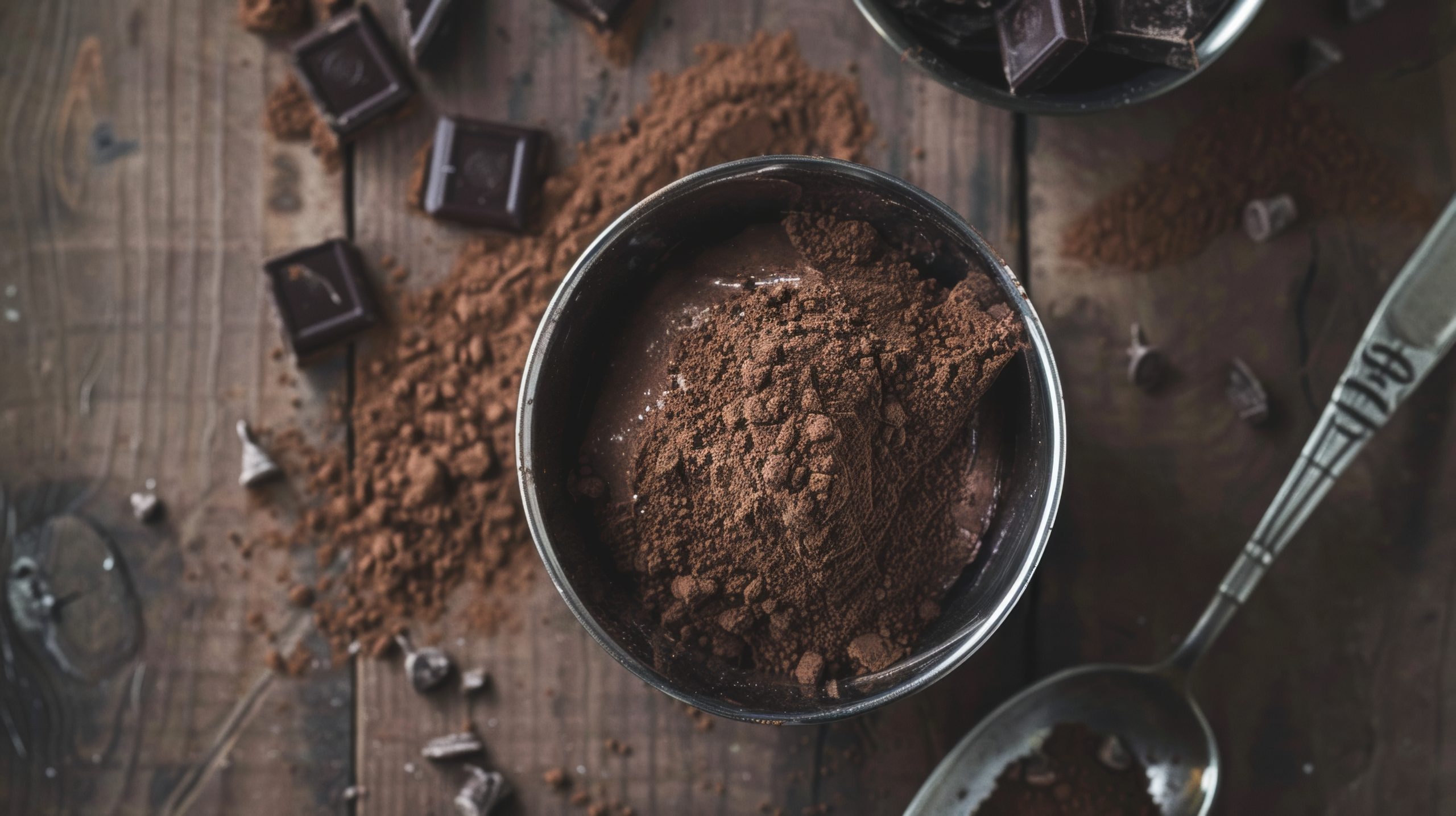
As sugar is reduced, the sensory characteristics of cocoa such as bitterness, astringency, acidity, and flavor notes become more noticeable. Therefore, selecting a cocoa powder that matches the desired sensory profile of the product becomes more important.
As Sugar Is Reduced, Cocoa Powder Selection Becomes More Important
In a highly sweet chocolate, the difference between two cocoa powders may not be particularly noticeable to the consumer. A significant part of the product’s sensory experience is shaped by sugar, and some subtle differences in cocoa remain in the background. But as sugar is reduced, this situation changes.
The flavor profile of cocoa becomes more important.
Cocoa with intense bitterness may be acceptable in a conventional sweet product, but in the low-sugar version of the same product, it may feel excessively sharp or bitter. In contrast, a more balanced profile can allow the product to remain pleasant and complete despite lower sweetness.
For this reason, sugar reduction should be accompanied by a review of the selection of key raw materials, because the goal of low-sugar product development should not be for the consumer to constantly notice something that has been removed from the product. The goal should be to create a new experience that remains complete by changing the balance.
The same experience but healthier…
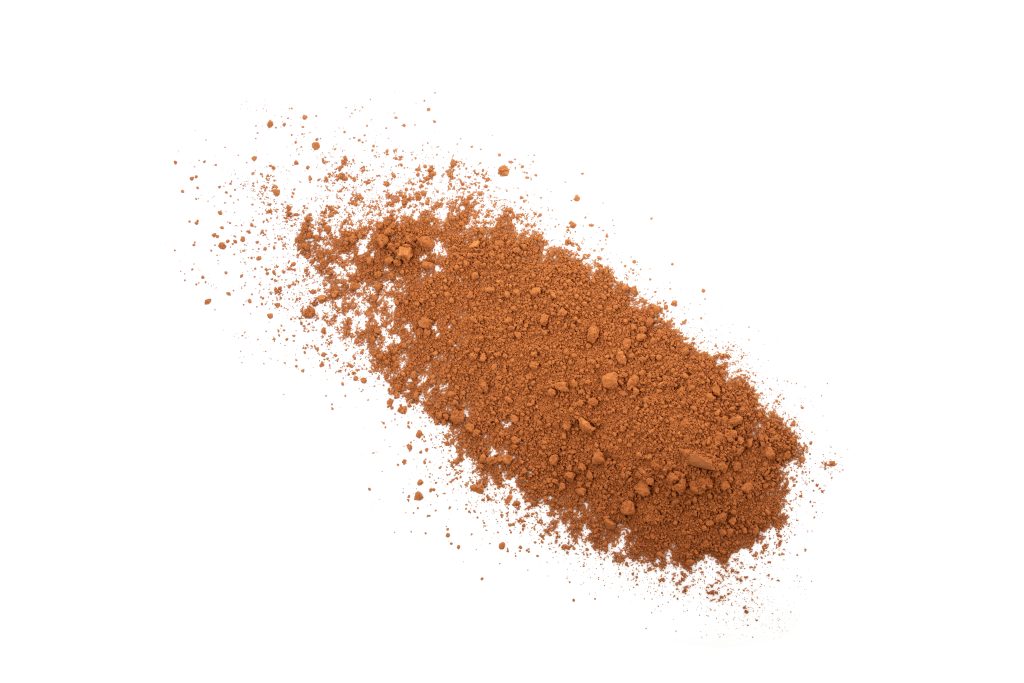
Bitterness and Astringency; Variables That Can No Longer Be Ignored
Alkalization is one of the important processes in cocoa powder production, during which the chemical conditions of the cocoa mass or powder are modified using alkaline substances. One result of this process is an increase in pH and a change in the sensory profile of cocoa.
Alkalization can generally reduce the acidity, bitterness, and astringency of cocoa and create a milder, rounder flavor profile. This characteristic becomes more important in low-sugar products because as the amount of sugar decreases, these sensory characteristics become less masked.
Therefore, in the formulation of chocolate or cocoa products with less sugar, alkalized cocoa powder can be a suitable choice, particularly when the goal is to reduce sweetness without increasing bitterness, astringency, or acidity in the final product.
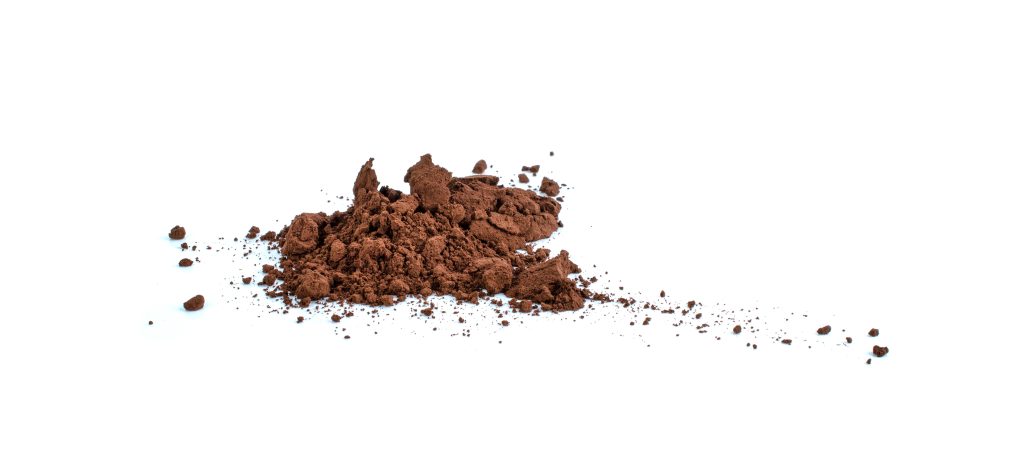
The Future of Low-Sugar Chocolate; Fewer Ingredients, but More Precise Selection
Market data show that some consumers simultaneously want two things: less sweetness and simpler ingredients.
These two demands do not always come together easily because completely removing sugar may require additional ingredients to rebuild its structural and sensory roles. In contrast, gradual and targeted sugar reduction can, in some formulations, make it possible to preserve the product structure with fewer changes.
In this approach, the quality of raw materials becomes more important; when the formulation is simpler and sweetness is also lower, there is less opportunity to hide weaknesses in the raw materials. Cocoa, fat, the production process, and particle distribution all become directly visible in the final experience.
For this reason, the move toward less sugar can lead the chocolate industry toward formulations that are more complex scientifically, but simpler in terms of the ingredient list.
This may be one of the most important contradictions of the next generation of products:
A formulation that looks simpler on the label may require more precise design behind the scenes.
Conclusion
Removing sugar from chocolate is difficult because sugar is not just a sweetener. It forms an important part of the physical structure of the product, affects texture and flow behavior, and also plays a role in balancing cocoa flavors.
In some cases, attempts to achieve a “sugar-free” product can make the formulation more complex, change the texture, and create an experience that moves away from what consumers expect from chocolate.
The market is also not necessarily moving toward complete sugar removal. The preference for milder sweetness, recognizable ingredients, and shorter ingredient lists suggests that the main opportunity may lie in smart sugar reduction rather than simply eliminating it.
In this context, cocoa selection becomes more important.
The less sugar there is, the more bitterness, astringency, acidity, and the flavor character of cocoa become visible. Therefore, low sugar product development is not only a question of sweeteners; it is a question of redesigning the balance between structure, sweetness, and flavor.