Cocoa Fermentation, The Largest Source of Variability in Cocoa Quality
The largest source of variability in cocoa quality does not necessarily occur in the chocolate factory.
A significant part of it begins much earlier, on the farm, when fresh cocoa beans are placed in a mass and the fermentation process begins.
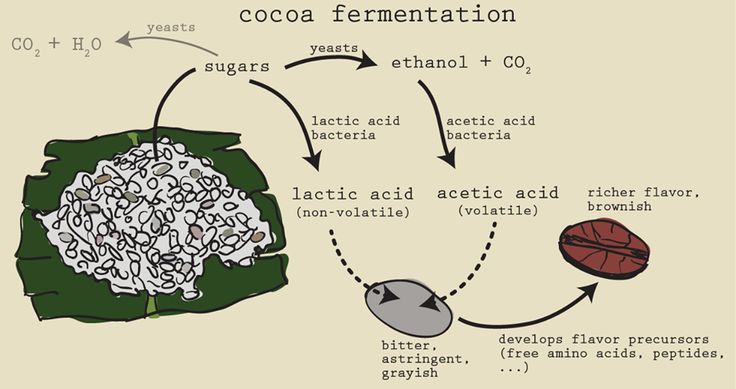
At this stage, a complex series of microbial, chemical, and biological changes takes place. Temperature changes, the environment becomes more acidic, compounds within the pulp and beans change, and reactions begin that will later determine what flavor potential the cocoa beans will have after drying and roasting.However, there is one fundamental issue.Despite the enormous importance of fermentation, this stage is still carried out naturally and with limited control across a large part of the cocoa production chain.
Environmental conditions, ambient temperature, the volume of the mass, the type of box or vessel, the rate of temperature change, oxygen availability, and the way the mass is turned can all alter the course of fermentation.As a result, two batches of cocoa, even if they come from the same region, do not necessarily follow the same fermentation pathway And if the fermentation pathway is different, the quality and flavor potential of the beans can also be different.
This is precisely why fermentation has become one of the most important sources of quality variability in the cocoa industry.
Why Does Traditional Fermentation Create Quality Variability?
The issue with traditional fermentation is not a lack of experience. Producers in many regions have been producing very high-quality cocoa using traditional methods for decades. The issue is variability.
A fermenting cocoa mass is not a fixed system. The composition of the microbial population, environmental temperature, mass volume, box material, the amount of pulp remaining, the rate of temperature increase, and the number of times the mass is turned can all change the fermentation pathway. In such a system, failing to control the main variables means that part of the final quality is left to random conditions.
چرا تخمیر سنتی کاکائو باعث تغییرپذیری کیفیت میشود؟
چون متغیرهای اصلی آن قابل تنظیم نیستند. دمای محیط، ترکیب جمعیت میکروبی، حجم توده، میزان پالپ باقیمانده و تعداد دفعات جابهجایی، همگی میتوانند مسیر تخمیر را تغییر دهند. نتیجه، تفاوت کیفیت میان محمولهها حتی از یک مزرعه است.
Three Variables That Shape the Fermentation Pathway
Before discussing recent research, it is important to clarify which variables can fundamentally be controlled:
Temperature: Affects the speed of reactions, microbial activity, and the activity of enzymes inside the bean.
Acidic conditions (pH): Determine the acidification pathway inside the bean and the range in which each enzyme remains active.
Aeration and mixing: Affect oxygen entry and the uniformity of the fermentation mass.
The 2025 Bioreactor Study, The First Independent Control of Three Variables
The authors describe their work as the first study to conduct cocoa solid-state fermentation in a stirred bioreactor while independently controlling temperature, acidity, and mixing at the same time, while preserving natural microbial activity. This is the key difference between this approach and previous laboratory models, which typically used sterilized beans in liquid media. In a liquid environment without microbes, the actual dynamics of fermentation cannot be reproduced.
How does controlled cocoa fermentation differ from traditional fermentation?
In controlled fermentation, temperature, acidic conditions, and mixing are independently and precisely managed while natural microbial activity is maintained. This makes it possible to improve repeatability and study the separate effect of each variable, something that is difficult to achieve in a traditional wooden box.
Experimental Design
Raw material: Commercial Trinitario cocoa of the FEAR 5 variety, harvested on 23 June 2023 from a four-hectare farm in Arauquita, Arauca, Colombia. Approximately 17% of the pulp mass was removed before fermentation.
Homogenization: All experiments were conducted using a single homogeneous batch to eliminate differences in the raw material.
Eight bioreactor treatments: Each treatment used 4.5 kg of beans in a jacketed stainless-steel vessel controlled by a programmable logic controller.
Two temperature treatments:
A constant temperature of 45°C for 120 hours, compared with a stepwise temperature profile of 35°C from 0 to 24 hours, 40°C from 24 to 48 hours, and 45°C from 48 to 120 hours.
Two mixing frequencies: 2 versus 24 cycles per day, with each cycle lasting 10 minutes at a speed of 60 rpm.
Two acidic conditions:
The addition of 500 mL of an acetic acid solution on day zero to lower the initial pH of the environment, compared with allowing pH to follow its natural pathway.
Control: Standard fermentation in a wooden box using 60 kg of fresh beans for 192 hours. Manual mixing was performed only after the mass naturally reached 45°C, at approximately 96 hours, and then twice per day.
The beans were dried with hot air at 40°C for 96 hours and then used to produce 70% chocolate according to the CIRAD protocol. Sensory evaluation was conducted by a trained panel of 13 people. After evaluating panel consistency, the results of four assessors were excluded, leaving nine evaluations for each sample. Three layers of analysis were conducted: sensory evaluation, volatile compound analysis, and untargeted metabolomics.
Cocoa Roasting : The Process That Defines Your Chocolate’s Flavor and Value
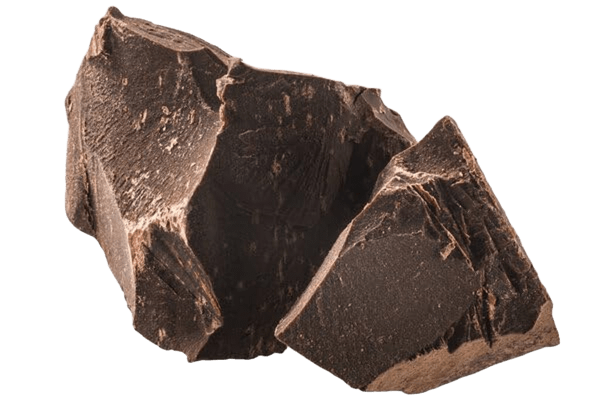
Cocoa roasting is key to chocolate’s flavor and quality. Discover the process, effects, and best practices to craft the right roast profile for your brand.
Acidification Inside the Bean, The Hidden Variable That Explains Everything
The central concept of this study is what the authors refer to as “internal pH behaviors.” What matters is not the pH of the fermentation mass surrounding the beans, but the pathway followed by the pH inside the beans themselves, where the enzymes are active.
The study identified four distinct patterns:
Pattern | Treatment | Acidification Path |
|---|---|---|
Behavior1 | Initial acidity adjustment under both temperature regimes | Fastest; equilibrium reached within 72 hours |
Behavior2 | Stepwise temperature profile, free acidity | Gradual decrease |
Behavior3 | Constant temperature of 45°C, free acidity | Slowest; equilibrium reached within 96 hours |
Behavior4 | Standard fermentation in a wooden box | Slow and delayed decrease |
Across all treatments, the internal pH eventually reached equilibrium, but the rate at which equilibrium was reached determined the flavor outcome. This is the most fundamental finding of the study: rapid acidification does not produce a better result; it only shortens the process.
Sensory Results, Four Different Families of Chocolate from a Single Homogeneous Batch
Four distinct families of chocolate were produced from one completely homogeneous batch of cocoa beans. The only reason for the difference was the fermentation conditions.
Group 1 — Rapid acidification with initial acid adjustment under both temperature regimes:
These chocolates were clearly perceived as astringent and bitter, with a less balanced sensory profile.
Group 2 — Stepwise temperature profile with free acidity:
These chocolates were described as acidic and did not demonstrate a particularly prominent complementary characteristic associated with superior quality.
Group 3 — Constant temperature of 45°C with free acidity:
These chocolates displayed prominent fruity, spicy, woody, and nutty notes. This group produced the best overall result in the study.
Group 4 — Standard fermentation from 144 to 192 hours:
These chocolates were strongly associated with undesirable animal and alcoholic flavors.
An important statistical point is that the three attributes of “cocoa aroma,” “cocoa flavor,” and “sweetness” did not show significant differences between the samples and were therefore excluded from the analysis. In other words, fermentation did not change the intensity of cocoa character; what changed was the type of secondary flavor notes.
For the industry, this distinction is important: controlled fermentation is a tool for creating flavor complexity, not a tool for increasing the fundamental cocoa character itself, In addition, four attributes, fruitiness, nuttiness, spiciness, and floral character, showed a positive correlation with overall quality.
Which variable has the greatest effect on the final flavor?
According to research published in LWT in 2025, temperature and initial acidic conditions had the greatest effect. Under conditions where temperature was precisely controlled, mixing frequency did not show a significant effect on the sensory profile, volatile compounds, or metabolome.
What Happens at the Molecular Level?
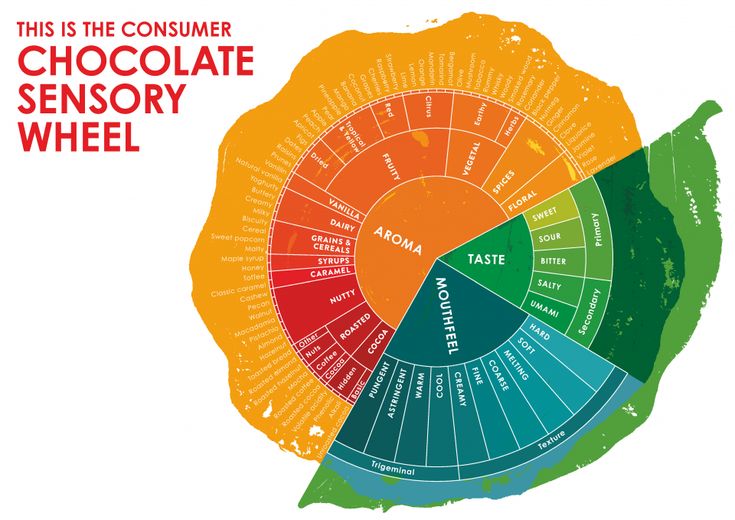
The study identified 59 volatile compounds in the chocolate samples and classified them into nine clusters based on aroma descriptors. The pattern of results was consistent with the sensory data.
Compounds associated with higher quality and found in greater abundance in the treatment using a constant temperature of 45°C with free acidity included:
Linalool — floral and tea-like notes
2-Phenylacetaldehyde — honey and rose notes
Heptan-2-al — fruity, citrus, and green notes
2-Acetylpyrrole — chocolate and hazelnut notes
Furfural — caramel and almond notes
Ethyl acetate and related esters — fruity notes
Compounds associated with bitterness and astringency were found at higher levels in treatments with early acidification, particularly heptan-3-al, which is associated with green and bitter notes.
Compounds associated with undesirable flavors reached their highest levels during standard fermentation between 168 and 192 hours. These included 2-methylpropanoic acid, associated with rancid and buttery notes; 3-methylbutanoic acid, associated with pungent and cheesy notes; and butane-2,3-dione.

Fermentation Time, Why More Does Not Mean Better
The time-based analysis showed that markers of higher quality and markers of lower quality reach their peaks at different times.
Markers associated with higher quality in the 45°C treatment with free acidity peaked between 72 and 120 hours.
In treatments with adjusted acidity, this peak occurred earlier, between 24 and 72 hours.
In standard fermentation, the peak occurred between 72 and 96 hours.
In contrast, markers associated with lower quality became more intense after 96 hours in the bioreactor and after 144 hours in standard fermentation.
Based on these findings, the researchers proposed the following optimal durations:
72 hours for bioreactor fermentation at 45°C with free acidity
48 to 72 hours for bioreactor fermentation with adjusted acidity
96 to 120 hours for standard fermentation
In the standard fermentation of the 2025 study, a clear sign of over-fermentation appeared after 144 hours: internal pH began to rise again toward 5, while animal notes became more intense at the same time.
Fermentation is not a continuously improving process. It has a window in which it should be stopped.
Does Mixing Not Matter?
One of the most unexpected findings was that the difference between 2 and 24 mixing cycles per day had no significant effect on any of the three layers of analysis — internal pH pathway, sensory profile, or volatile compound profile.
However, this finding should not be interpreted as meaning that mixing does not matter. A more precise interpretation is:
In a system where temperature is controlled externally and uniformly, mixing is no longer required to perform the function of heat transfer.
In a traditional wooden box, turning the cocoa mass performs several functions simultaneously: distributing heat, introducing oxygen, and homogenizing the mass. In a jacketed bioreactor, the temperature-related part of this function is already controlled externally.
Therefore, what this study demonstrates is that under precise temperature control, mixing is not an independent determining variable. It does not mean that mixing is unimportant in traditional fermentation.
This is precisely one of the advantages of a controlled system: the ability to separate the effect of each variable from the others. In a wooden box, changing one factor is almost always accompanied by changes in other factors.
What Do These Findings Mean for the Cocoa and Chocolate Industry?
For those working across the cocoa supply chain, several practical conclusions can be drawn from this research:
1. Fermentation is not a waiting stage; it is a process stage.
Just as no one would leave roasting time and temperature entirely to chance, fermentation also follows a specific pathway that can be recorded and repeated.
2. The temperature pathway matters more than the final temperature.
Both temperature regimes in this study eventually reached 45°C, but they produced completely different sensory results. What mattered was how long, and at which stage, the beans remained within the optimal enzymatic range.
3. The stopping time is a quality decision.
The difference between balanced cocoa and cocoa with animal notes may be as little as 48 hours.
4. Data recording is the most accessible first step.
Even without a bioreactor, regularly recording fermentation mass temperature, pH, and time — and linking these data to the sensory evaluation of each batch — is a practical first step toward applying the same logic demonstrated by this research at laboratory scale.
5. For buyers, this means that more precise specifications may become possible.
Until now, cocoa specifications have largely been defined based on origin, variety, and degree of fermentation. The next step may be the addition of process parameters and molecular markers to these specifications.

Does greater control always improve cocoa quality?
Not necessarily. In the same study, the treatments in which the initial acidity was adjusted by adding acid, representing the, greatest level of intervention, were evaluated as more bitter and astringent. Adjusting acidity can shorten the process, but it does not improve sensory balance.
What effect does over-fermentation have on cocoa quality?
Continuing fermentation beyond the optimal window can lead to the accumulation of undesirable compounds such as 3-methylbutanoic acid and 2-methylpropanoic acid, which are associated with animal and alcoholic flavor notes.
Conclusion
For a long time, cocoa fermentation was considered a stage that simply needed to be “done correctly,” rather than a stage that could be designed.
Bioreactor research is beginning to change that perspective.
The genetics of the bean, climate, fruit maturity, drying, and roasting still influence the final result.
What has truly changed is the nature of the question.
Until recently, the question was:
“What does this cocoa batch taste like?”
Today, it is becoming possible to ask:
“If we want cocoa with this particular sensory profile, how should the fermentation process be designed?”
That change in the question may be the most important achievement of all.