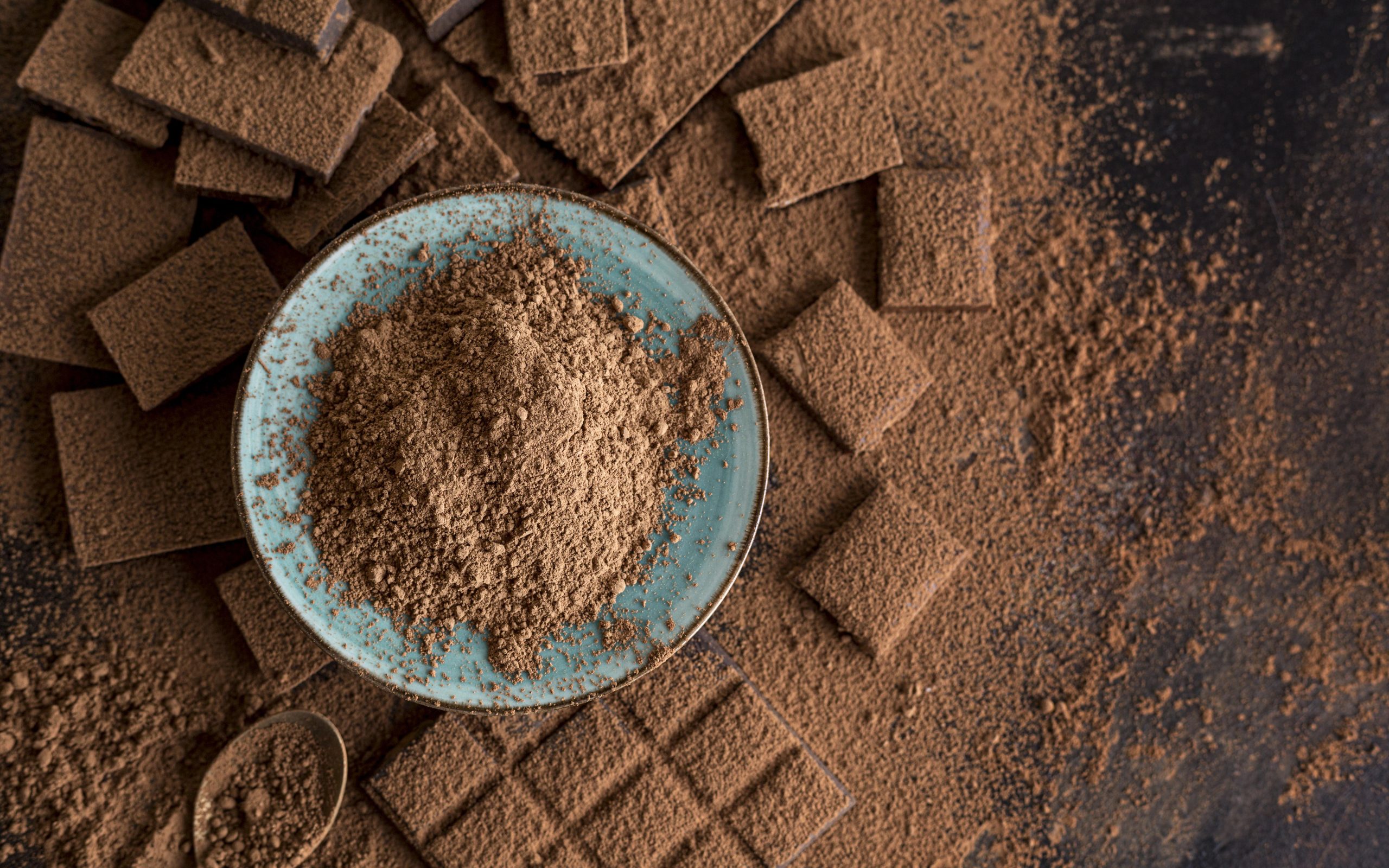
What Is Natural Cocoa Powder?
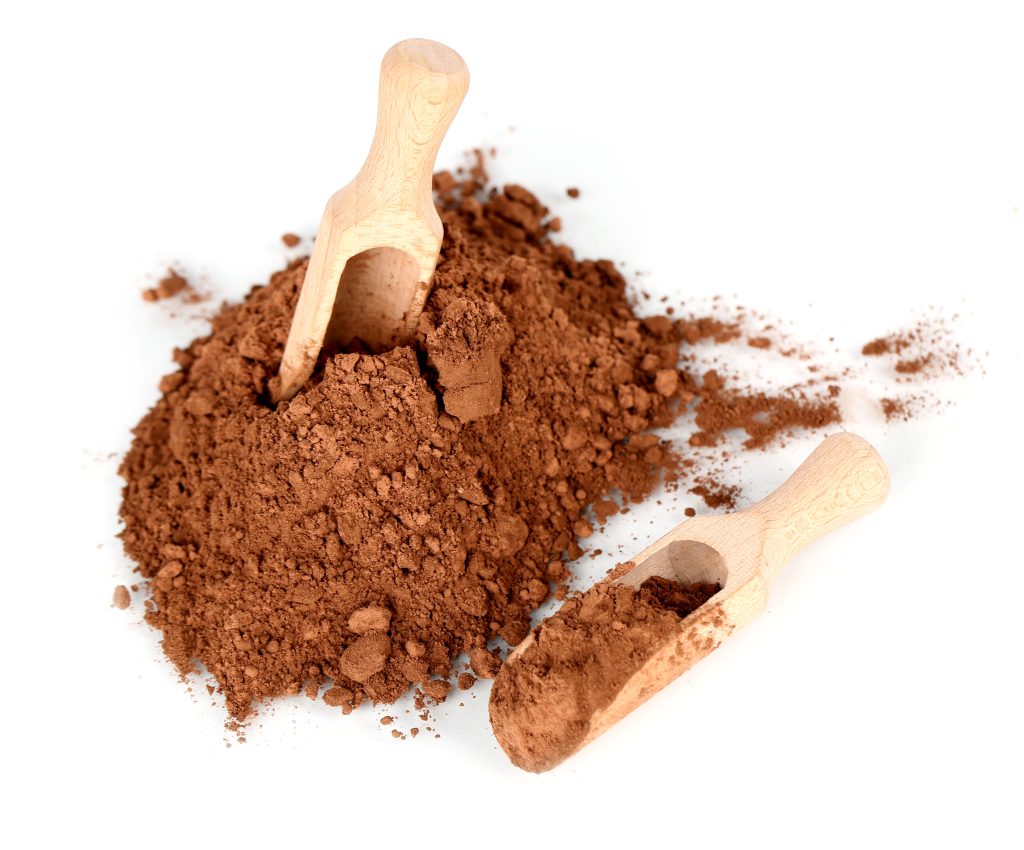
Natural Cocoa Powder is produced by grinding cocoa solids after part of the cocoa butter has been extracted, without undergoing an alkalization process.
In this type of cocoa powder, most of the naturally occurring acids in the cocoa beans are preserved. As a result, it typically has an acidic pH and ranges in color from light brown to reddish-brown.
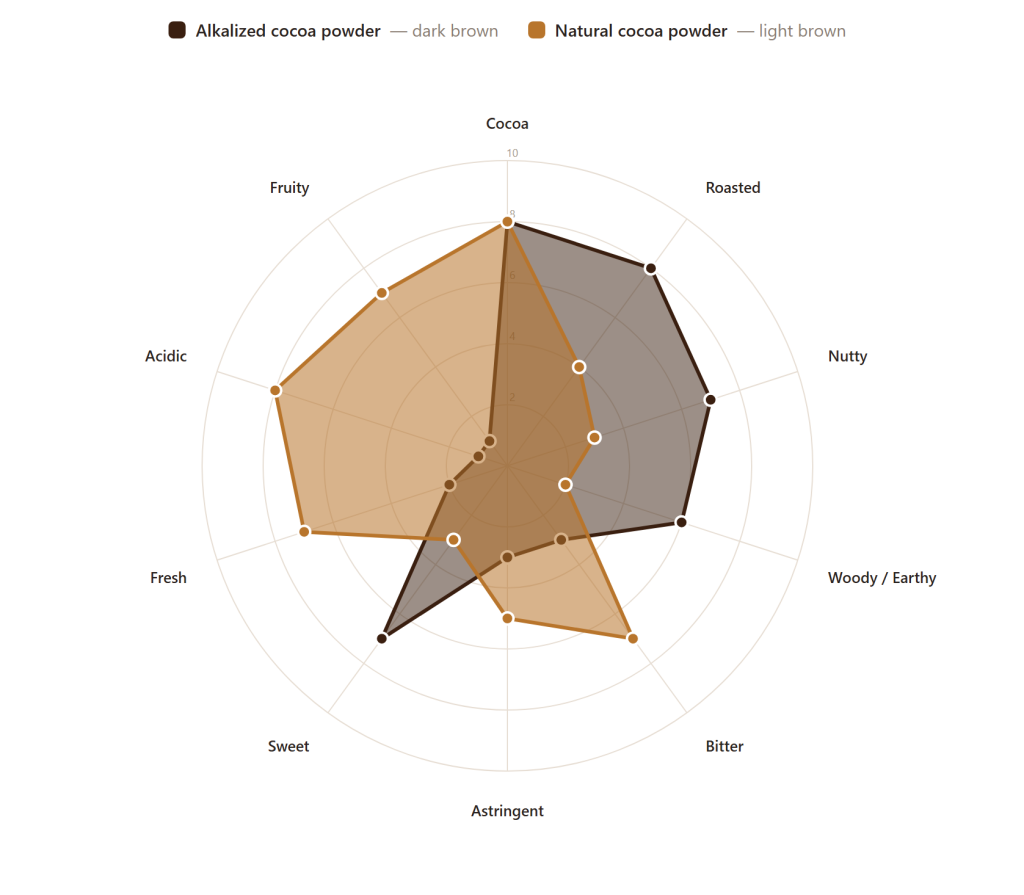
Sensory-wise, natural cocoa powder generally has higher acidity, fruity notes, and a brighter, more pronounced cocoa flavor.
These characteristics make natural cocoa powder a suitable choice for applications where a brighter flavor profile or natural acidity is important.
What Is Alkalized Cocoa Powder?
Alkalized Cocoa Powder is cocoa powder that undergoes an alkalization process after production.
During this process, the cocoa is treated with suitable alkaline agents to neutralize part of its natural acidity. The intensity of alkalization can vary, resulting in cocoa powders with a wide range of pH levels, colors, and sensory characteristics.
Depending on the degree of alkalization, the color can range from deep brown and reddish-brown to very dark brown and even black.
For this reason, alkalized cocoa powders are widely used in applications where a dark color and deep chocolate appearance are desired.
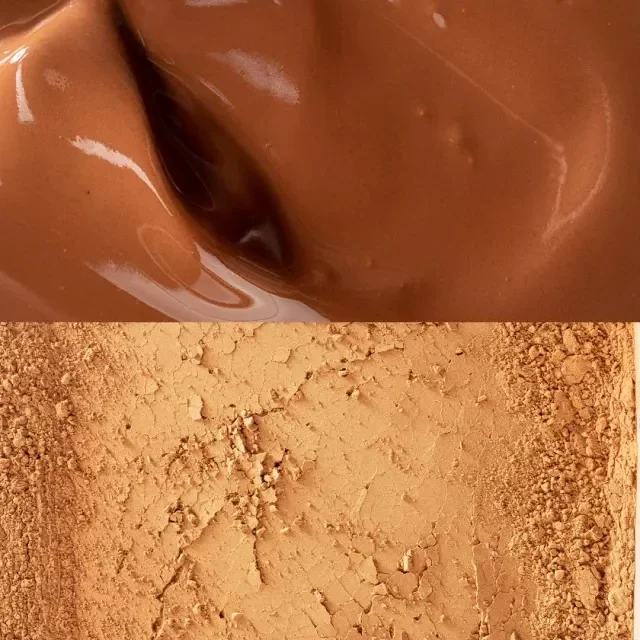
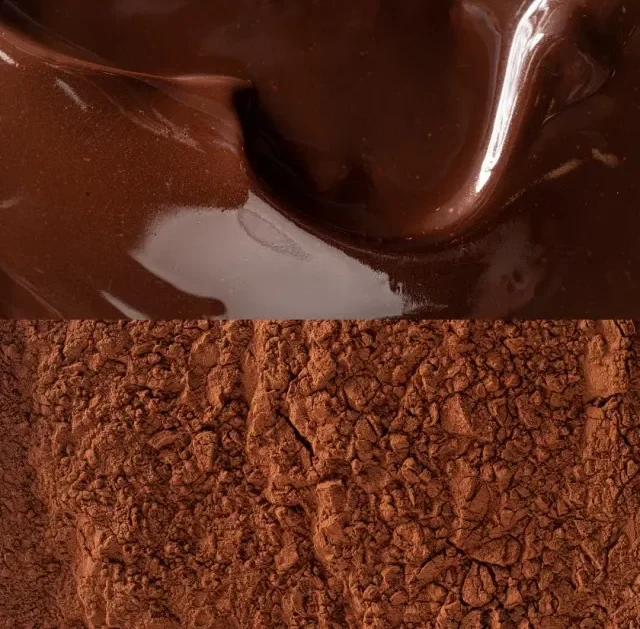
How Does Alkalization Change the Properties of Cocoa?
The alkalization process can be simplified as follows:
pH ↑ → Alkali Treatment → Acidity ↓ → Changes in Color & Flavor Profile
However, the changes are not limited to pH alone.
During alkalization, some of the naturally occurring acids, phenolic compounds, and cocoa pigments are affected by the alkaline environment. These changes can result in lower perceived acidity, darker color, and a milder sensory profile.
The degree of alkalization, type of alkaline agent, processing conditions, and characteristics of the raw material can all influence the final properties of the cocoa powder.
Can natural and alkalized cocoa powder be substituted for each other?
Innovative Cocoa Flavor Pairing؛ Scientific Principles and Formulation Approaches
Discover how innovative cocoa flavor pairing enhances product development through scientific formulation principles and flavor strategies.
pH Differences Between Natural and Alkalized Cocoa Powder
One of the most important measurable differences between the two types of cocoa powder is pH.
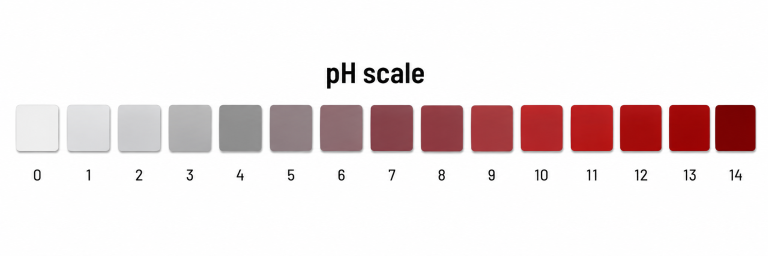
Natural cocoa powder typically has a more acidic pH, while alkalized cocoa powders can shift toward a neutral or alkaline range, depending on the degree of alkalization.
For example, a moderately alkalized cocoa powder may have a pH of around 6–8, while some highly alkalized grades can reach even higher values.
However, pH should not be considered equivalent to total acidity. For a more accurate assessment, Titratable Acidity (TA) is also important. While pH indicates the activity of hydrogen ions, titratable acidity provides a better indication of the total amount of acid compounds that can be neutralized.
Color Differences Between Natural and Alkalized Cocoa Powder
Color is one of the most noticeable differences between these two types of cocoa powder.
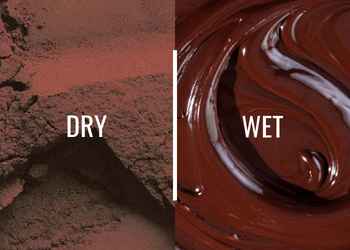
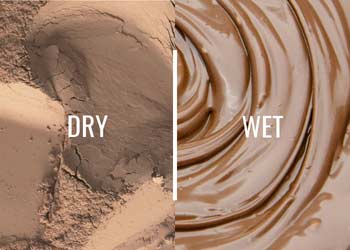
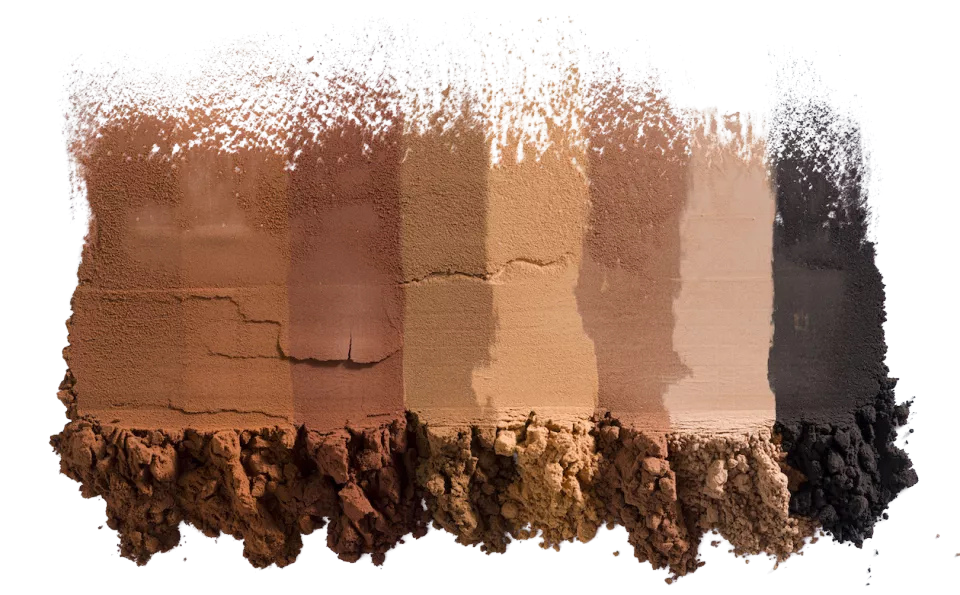
Natural cocoa powder typically ranges from light brown to reddish-brown. As the degree of alkalization increases, the color can shift toward dark brown, reddish-brown, very dark brown, and even black.
As a result, terms such as the following are commonly used to describe different alkalization grades:
- Light Alkalized
- Medium Alkalized
- Dark Alkalized
- Strongly Alkalized
However, final color is not determined by pH alone. Factors such as bean origin, fermentation, roasting, fat content, particle size, and processing conditions can also influence the color of cocoa powder.
Flavor Differences Between Natural and Alkalized Cocoa Powder
The sensory differences between these two types are also important when selecting a cocoa powder for a specific application.
Natural Cocoa Powder
Its sensory profile may typically be described as:
More acidic, brighter, fruitier, and sharper
These characteristics can contribute to a more vibrant cocoa flavor in certain formulations.
Alkalized Cocoa Powder
As the degree of alkalization increases, perceived acidity generally decreases, and the flavor profile can become milder, smoother, deeper, and less acidic.
However, this does not mean that alkalized cocoa powder always has a better flavor. The right choice ultimately depends on the desired sensory profile of the finished product.
Which cocoa powder has a darker color?
Alkalized cocoa powders generally have a darker color than natural cocoa powder, particularly Medium and Strong Alkalized grades.
How Does Cocoa Powder pH Affect Formulation?
One of the most important factors to consider when selecting cocoa powder is its impact on formulation performance.
In baked products, the use of baking soda and baking powder should be evaluated alongside the acidity of the other ingredients.
Natural cocoa powder contains natural acidity and can contribute to formulations where an acidic component is needed to react with sodium bicarbonate (baking soda).
In contrast, alkalized cocoa powder has had a significant portion of its natural acidity neutralized. Therefore, directly replacing natural cocoa powder with alkalized cocoa powder or vice versa without evaluating the entire formulation can affect the pH, volume, texture, color, and sensory characteristics of the final product.
For this reason, during reformulation, it is not enough to simply keep the cocoa powder usage level unchanged while switching its type. The overall acid–alkali balance of the formulation should be reassessed.
What Is the Difference Between Light, Medium, and Strongly Alkalized Cocoa Powder?
Alkalized cocoa powders are not a uniform category. The degree of alkalization can vary significantly between different grades.
Light Alkalized
This grade undergoes a relatively mild alkalization process, so its characteristics can remain closer to those of natural cocoa powder.
The color is generally lighter brown, while some of the cocoa’s natural acidity and flavor characteristics are retained.
Medium Alkalized
At this level, changes in color and pH become more noticeable. The powder typically develops a deeper brown color and a milder flavor profile.
This grade is widely used in bakery products, biscuits, and desserts.
Strongly Alkalized
With intensive alkalization, the cocoa powder can become very dark or nearly black.
This type is commonly used in applications where a very dark color, Black Cocoa appearance, or a distinctive sensory profile is desired.
However, the grade should always be selected based on the final formulation and application, rather than color intensity alone.
Applications of Natural Cocoa Powder in the Food Industry
Its applications include food spreads and formulations where a more acidic cocoa flavor profile is desired.
In these products, in addition to flavor, the compatibility of the cocoa powder’s pH with other ingredients and the leavening system is also an important consideration.
Applications of Alkalized Cocoa Powder in the Food Industry
Alkalized cocoa powders are widely used in the food industry due to their ability to provide deep colors and a milder flavor profile.
Common applications include:
- Biscuits and cookies
- Cakes and desserts
- Creams and fillings
- Ice cream
- Cocoa-based beverages
- Chocolate products
- Sauces and cocoa-based formulations
- Products requiring a very dark color
In applications where a dark and consistent appearance is important, selecting the appropriate alkalized cocoa grade can play a key role in the final product’s appearance.


What is the difference between Light and Strong Alkalized cocoa powder?
The main difference is the degree of alkalization, which affects pH, color, acidity, and sensory characteristics. Strong Alkalized cocoa powder typically has a much darker color than Light Alkalized cocoa powder.
Is Alkalized Cocoa Powder Always Better Than Natural Cocoa Powder?
No. Neither type can be considered universally better.
The right choice should be based on the requirements of the finished product.
If the goal is a darker color and milder flavor profile, alkalized cocoa powder may be the more suitable choice. If the formulation requires natural cocoa acidity and a brighter, fruitier flavor, natural cocoa powder may be a better option.
Ultimately, cocoa powder selection is a formulation decision that should be based on a combination of performance characteristics not simply price or color.
How Should You Select the Right Cocoa Powder for Your Product?
When selecting a cocoa powder, it is best to evaluate these parameters together:
Color + pH + Fat Content + Particle Size + Flavor + Application
Color alone does not guarantee optimal performance in a finished product.
For example, two cocoa powders may have a similar color but perform differently in the same formulation due to differences in pH, fat content, particle size, or sensory profile.
Therefore, during the R&D process, different cocoa powder samples should ideally be evaluated in the finished product application to determine their actual performance.
Does alkalized cocoa powder have a better flavor?
Not necessarily. Alkalization generally reduces acidity and creates a milder flavor profile, but its suitability depends on the application and desired sensory profile.
Can Natural Cocoa Powder Be Replaced with Alkalized Cocoa Powder?
Replacing one type with the other should be done with caution.
Since they differ in pH and acidity, changing the type of cocoa powder can affect acid–alkali reactions, color, and texture in the final product.
Therefore, in an industrial formulation, any replacement should ideally be evaluated through trials and validation in the finished product.
When changing the cocoa grade, parameters such as pH, color, usage level, leavening system, and sensory characteristics should be reassessed.
Conclusion
The difference between natural and alkalized cocoa powder goes far beyond color.
Natural cocoa powder typically has a lower pH, higher acidity, lighter color, and a brighter, fruitier, and sharper flavor profile.
Alkalized cocoa powder undergoes the Dutching process, which increases its pH and can produce a deeper color and milder flavor profile. The degree of alkalization determines how significantly the final powder differs from natural cocoa in terms of color and sensory characteristics.
Therefore, when selecting cocoa powder for food applications, pH, color, fat content, particle size, sensory profile, and final application should be evaluated together.
Ultimately, the best cocoa powder is not necessarily the darkest or most highly alkalized one. The best choice is the powder that offers the highest compatibility with the formulation and the desired characteristics of the finished product.