Four Forces Changing the Chocolate Industry at the Same Time
Supply pressure: Climate, structural, and regulatory challenges in producing regions have limited cocoa supply.
Price volatility: Price increases and declines over a two year period have created the most unprecedented period of volatility in recent years.
Consumer health orientation: Demand for low sugar, sugar free, and functional chocolate is growing.
Regulatory complexity: New European regulations have made proof of origin and supply chain sustainability mandatory.
Each of these forces could be managed individually. What makes the current situation different is their simultaneous occurrence. A producer facing a more expensive and scarcer raw material must simultaneously develop a healthier product and document the origin of every kilogram of cocoa.
Cocoa Shortage; stocks to grindings ratio
The cocoa market has always been volatile. To understand why the recent period is different, we need to look at an indicator that the industry itself uses to assess supply health: the stocks to grindings ratio. This ratio shows what percentage of the industry’s annual consumption is covered by end of season stocks. In other words, it indicates how thick the market’s buffer is.
In the 2023 to 2024 season, end of season stocks fell by 28 percent to 1270 million tons; the stocks to grindings ratio fell to 26.4 percent.
In the 2024 to 2025 season, global gross production grew by 5.8 percent to 4733 million tons, while global grindings declined by 3.3 percent to 4649 million tons. End of season stocks increased by nearly 3 percent to 1309 million tons, and the stocks to grindings ratio returned to 28.2 percent.
For the 2025 to 2026 season, the ICCO Secretariat has temporarily not published production and grindings data.
These figures contain two messages that remain hidden behind the headlines. First, stocks of more than 2 million tons in 2021, compared with annual grindings of nearly 5 million tons, represented a ratio of around 40 percent; the decline to 26 percent means that the market buffer has become approximately one third thinner. Second, and more importantly, the partial return to balance in 2024 to 2025 did not come from increased supply, but mainly from lower demand; global grindings fell by 3.3 percent because high prices pushed the industry toward using less cocoa per unit of product. Formula redesigns appeared in the grindings statistics before they appeared in trend reports.
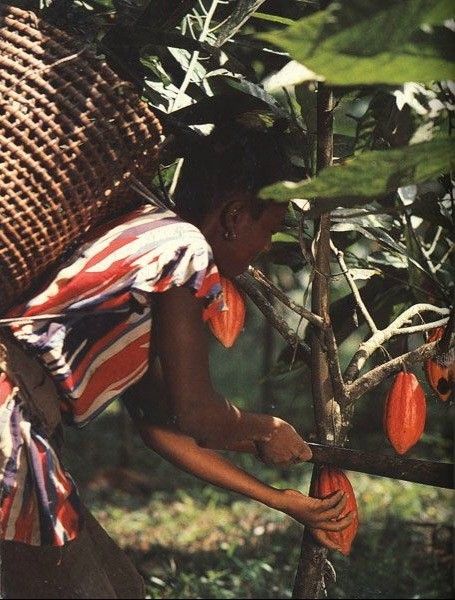
More than two thirds of global cocoa production comes from West Africa, particularly Côte d’Ivoire and Ghana, and this geographical concentration is what turns one dry season, the outbreak of a plant disease, or a regulatory change in one region into a global shock.
Cocoa Shortage; The Issue Is Volatility
The price trajectory reflects this thin buffer, moving from around 2000 Swiss francs per ton in 2022 to more than 10000 Swiss francs in early 2024, five times higher in less than two years, and then returning to around 2500 Swiss francs in early 2026.
For the industry, what matters is not the price level, but the range of volatility. A producer who knows that cocoa is expensive can adjust the formula and pricing accordingly. A producer who does not know whether cocoa will be half the current price or twice the current price three months from now cannot plan contracts, hold inventory, or plan profit margins. This uncertainty is what has pushed the industry toward formula redesign, and its effect, as we have seen, can be measured in the 3.3 percent decline in global grindings.
The Industry’s Response: Hybrid Cocoa, Not Chocolate Without Cocoa
What distinguishes the Deloitte report from similar reports is its description of the industry’s response; producers are increasingly combining real cocoa with alternatives to reduce costs and price volatility while maintaining consumer sensory acceptance.
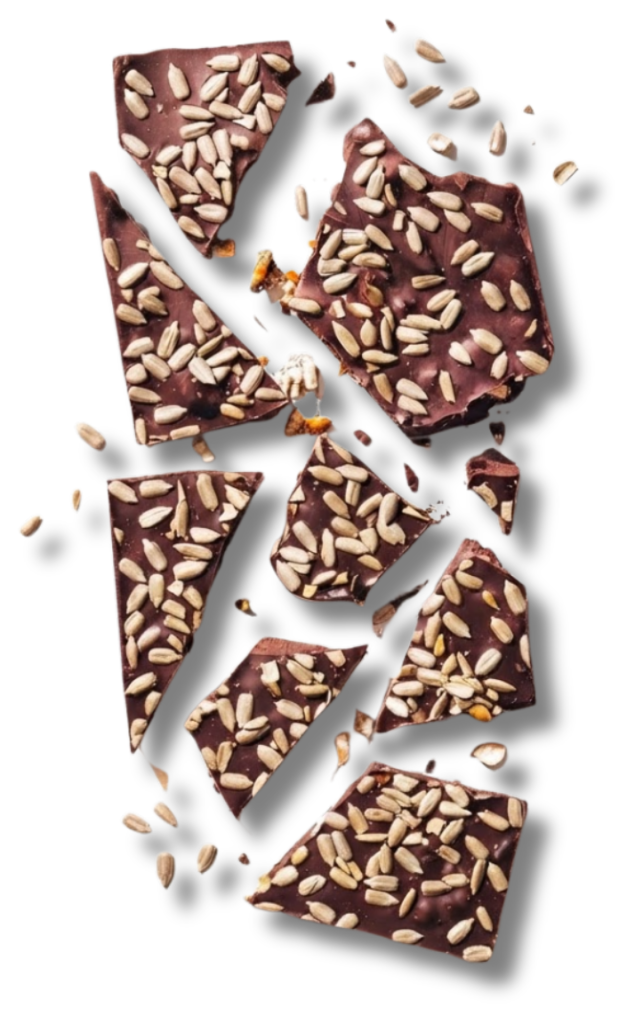
The alternatives mentioned in the report come from agricultural byproducts: grape seeds, sunflower meal, and carob. But the technical question is, what exactly are these alternatives replacing? The answer lies in the chemistry of cocoa aroma.
What is hybrid cocoa?
The combination of real cocoa with alternatives derived from agricultural byproducts such as grape seeds, sunflower meal, and carob, in order to reduce costs and price volatility while maintaining consumer sensory acceptance. According to the Deloitte report, this strategy is becoming increasingly serious.
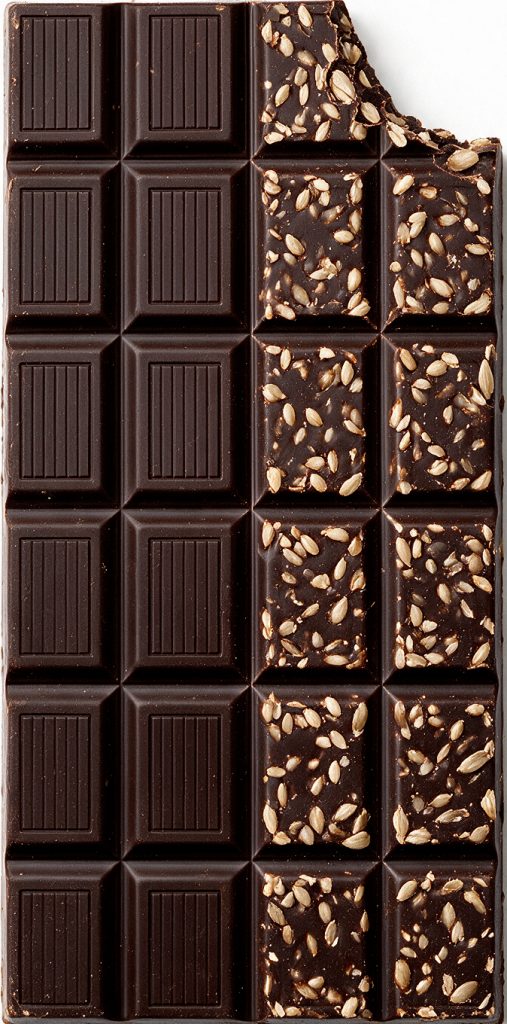
Can cocoa alternatives create chocolate flavor?
No. Research on aroma chemistry has shown that cocoa identity comes from around 24 key volatile compounds that are mainly formed through the fermentation and roasting of cocoa beans, such as Strecker aldehydes that arise from amino acids released during fermentation. Alternatives such as carob, which has no fermentation stage, provide volume, sweetness, and color, but they do not produce these compounds.
Why Alternatives Cannot Create Chocolate Identity?
The decisive point in this list is the origin of these compounds. 3 methylbutanal, 2 methylbutanal, and phenylacetaldehyde are Strecker aldehydes; during roasting, they are formed through the reaction of free amino acids, leucine, isoleucine, and phenylalanine, with reducing sugars, and these free amino acids are themselves products of protein breakdown in the bean during fermentation. Acetic acid and 3 methylbutanoic acid also arise directly from microbial fermentation activity. Simply put, “chocolate aroma” is the aroma of a fermented and roasted bean, not the aroma of a raw material.
This is where the limitation of alternatives becomes clear. Carob is the oldest and most well known cocoa alternative. According to the review by Loullis and Pinakoulaki in European Food Research and Technology, it is a naturally sweet powder with high sugar content, without theobromine and caffeine, and it is produced without any fermentation stage. These characteristics make it suitable for providing volume, natural sweetness, and brown color, but it does not contain the set of precursors formed during cocoa fermentation that are converted during roasting into Strecker aldehydes and characteristic cocoa pyrazines. The same logic applies to grape seeds and sunflower meal.
Therefore, the division of roles in a hybrid formula comes from the chemistry itself; the alternative provides volume, color, and part of the texture; the 24 compounds that create chocolate identity come only from real cocoa.
Hybrid Cocoa ,Innovation in the Chocolate Industry
Perhaps the most important mistake when looking at the future of the industry is creating a simple binary.
Real cocoa versus cocoa alternatives. But the actual path is probably more complex.
Part of the market may remain dependent on 100 percent cocoa products and an authentic chocolate experience, while a new space may emerge in another part. A space for hybrid products.
Products in which real cocoa is present but is not the only player in the formulation.
This middle space could become one of the most important fields of innovation in the chocolate industry.
The Hybrid Cocoa Paradox: Less Cocoa, More Important Cocoa
Against this background, the result that initially appears counterintuitive takes on a simple mathematical explanation.
The odor activity value of each compound is the ratio of its concentration to its perception threshold. When the share of cocoa in a formula decreases, for example, from 20 percent to 12 percent, the concentration of each of those 24 key compounds in the final product also decreases by 8 percent. Compounds that had high odor activity values remain above the threshold. But compounds that were close to the threshold fall below the threshold and disappear from perception. Cocoa aroma does not become linearly “weaker”; some dimensions disappear all at once, leaving a simpler and flatter profile. This is what the consumer describes as “like chocolate, but not chocolate.”
There are two ways to compensate. The first is to increase the cocoa share again, which brings back exactly the cost and volatility that the hybrid formula was designed to avoid. The second is to use a powder with a higher density of aroma compounds; a powder in which the same 24 compounds are present at higher concentrations, keeping more of them above the threshold even at a lower dosage.
For this reason, in a hybrid formula, the importance of cocoa quality does not decrease as its share decreases; it multiplies. In the traditional formula, a large amount of cocoa could mask the weakness of an average powder. In a hybrid formula, there is no such cover.

Why does cocoa quality become more important as the share of cocoa in the formula decreases?
Because the perception of each aroma compound depends on the ratio of its concentration to its perception threshold. As the share of cocoa decreases, compounds that were close to the threshold fall below it, and the aroma becomes nonlinearly simpler and flatter. Only a powder with higher aroma density can keep these compounds above the threshold at a lower dosage.
healthy chocolate
At the same time as supply pressure, consumers have also changed. Deloitte reports that searches for the phrase “healthy chocolate” have doubled over four years and reached their highest level in early 2026; demand for low sugar, sugar free, and functional formulations has increased.
This force aligns with the previous one. Sugar acts as a masking agent in chocolate and hides the bitterness and astringency of cocoa; as sugar decreases, cocoa is exposed to more direct judgment. Hybrid cocoa reduces the share of cocoa and demands complete identity from that smaller share. Two different forces lead to one result: every gram of cocoa must do more work.
What Type of Cocoa Powder Does This Mean?
If the criterion for selecting cocoa powder changes from “price per kilogram” to “effect per gram,” the technical specifications that matter also change. In a hybrid or low sugar formula, three characteristics are decisive:
1. Aroma and flavor density. Based on the logic of odor activity value, a powder that carries key aroma compounds at higher concentrations can maintain a clear chocolate presence even at a lower dosage. In cost calculations, what should be compared is “cost per sensory effect”; a more expensive powder that achieves the same effect at half the dosage is cheaper in the final formula.
2. Controlled bitterness and astringency. When there is less sugar and more tasteless alternative material, the bitterness and astringency of cocoa come forward more easily. Alkalization specifically targets these two characteristics. A study by Shi and colleagues, published in Food Chemistry in 2025, showed that the main compounds responsible for the bitterness and astringency of cocoa powder, including epicatechin, theobromine, and caffeine, bind to bitter taste receptors on the tongue and salivary proteins, and that alkalization reduces the amount of these compounds by 25 to 60 percent and increases sensory acceptance. For a formula with low cocoa and low sugar, this is a direct technical advantage.
3. Color intensity. Plant based alternatives are usually lighter brown than cocoa. The degree of alkalization shifts the powder color across a definable range. A dark powder at a low dosage can provide the expected chocolate color to the entire product and remove the color burden from the alternative.
What advantage does dark alkalized cocoa powder have in hybrid or low sugar formulas?
Three advantages: concentrated aroma and flavor that remains present at a low dosage; controlled bitterness and astringency because alkalization reduces the compounds responsible for these two characteristics by 25 to 60 percent; and deep color that removes the color burden from lighter alternatives.
The Origin of Cocoa Must Be Proven
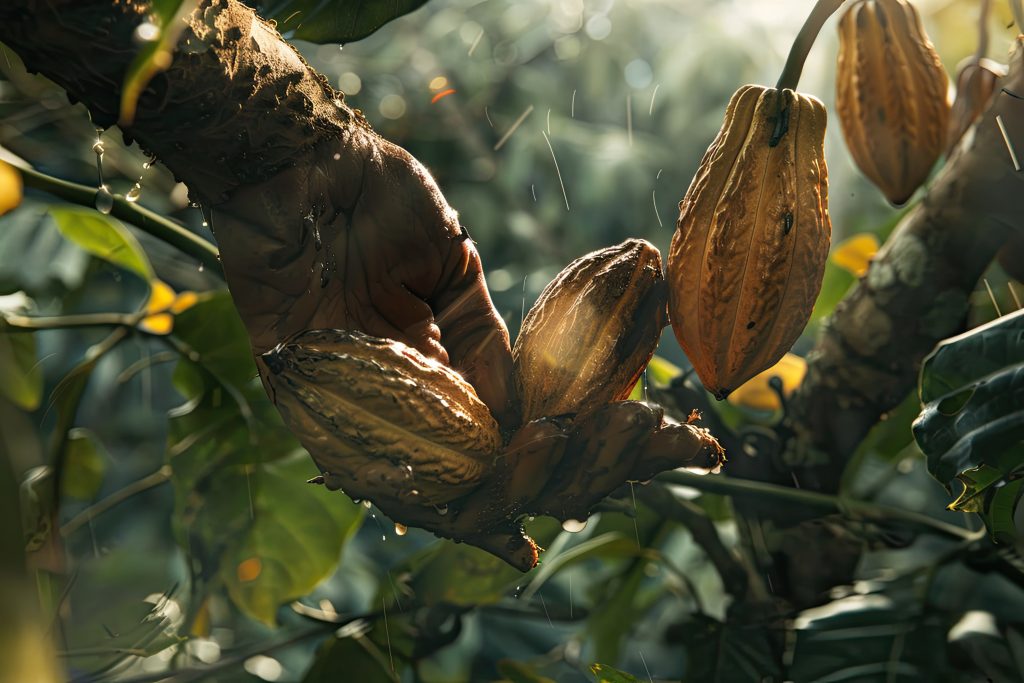
The final force mentioned by Deloitte is related less to formulation and more to the supply chain. New European regulations, including the European Union Deforestation Regulation (EUDR) and corporate sustainability reporting requirements, have required traceability, sustainability, and respect for human rights in the cocoa supply chain to be documented and proven.
For the cocoa powder buyer, this means that “origin” has changed from a marketing characteristic into a documented requirement. A supplier that can provide the origin, processing route, and sustainability documentation for each shipment represents one less risk for its customer in a market moving in this direction, and when every gram of cocoa becomes more important, knowing where that gram came from also becomes more important.
Conclusion
Global cocoa prices rise and fall, but what has changed behind them is structural; the stocks to grindings ratio has fallen from around 40 percent to below 30 percent, volatility has become the rule, and the market has recovered part of its balance not through increased supply, but through lower demand. In other words, the industry is already consuming less cocoa per unit of product. Hybrid cocoa is the formal name for this development.
The chemistry of cocoa aroma explains why this path does not reduce the importance of cocoa quality but multiplies it: chocolate identity is formed by around 24 volatile compounds, all of which are products of cocoa bean fermentation and roasting, and no plant based alternative produces them. As the share of cocoa decreases, compounds that were close to the perception threshold are lost, and only a powder with higher aroma density can keep them above the threshold at a lower dosage.