Can a high-quality cocoa powder lose its properties before reaching the production line?
The answer is yes.
The quality of cocoa powder does not depend only on factors such as cocoa bean origin, fermentation, roasting, and alkalization processes. Packaging also plays a crucial role in preserving the product’s characteristics until final use.
Due to its very fine particle size, natural cocoa butter content, and aromatic compounds, cocoa powder is sensitive to environmental factors such as moisture, oxygen, light, and external odors.
A standard cocoa powder packaging system acts as a protective barrier and must maintain the physical, chemical, and sensory properties of cocoa powder from production until it enters food manufacturing processes.
For manufacturers of chocolate, cocoa beverages, ice cream, biscuits, confectionery products, and instant drinks, selecting the right packaging can help prevent issues such as quality degradation, color changes, poor dispersion, and reduced product performance.

Moisture Absorption and Caking
Moisture is one of the most important factors affecting the quality of powdered food products. Due to its high surface area, cocoa powder has a strong tendency to absorb water vapor.
Moisture penetration into the package causes particles to stick together and form lumps, a phenomenon known as caking. This can reduce flowability, create difficulties in handling, transportation, and dosing, and decrease the powder’s dispersion rate in water or milk.
This issue is particularly important in instant beverage and dairy applications, where cocoa powder must disperse uniformly throughout the production system.
Therefore, cocoa powder packaging must provide sufficient resistance against water vapor transmission.
Preventing Cocoa Butter Oxidation
Cocoa powder typically contains approximately 10–24% fat, a significant portion of which is cocoa butter. This fat content plays an important role in the flavor profile, mouthfeel, and functionality of the final product.
Long-term exposure to oxygen can lead to oxidation of lipid components and reduce the sensory quality of cocoa powder. This process may result in loss of fresh flavor, development of undesirable off-notes, and reduced product stability over time.
For this reason, packaging structures with high oxygen barrier properties are essential for preserving cocoa powder quality.
Preserving Cocoa Flavor and Color
The aromatic and flavor characteristics of cocoa powder are developed through processes such as fermentation, roasting, and grinding. Volatile compounds responsible for the aroma profile may decrease under improper storage conditions or may be affected by external odors.
Color is also a critical quality parameter, especially for alkalized cocoa powders. Exposure to light and unsuitable storage conditions may gradually affect color stability and product uniformity.
Therefore, packaging must not only prevent the loss of aromatic compounds but also protect the product against external odors and light exposure.
Main Factors Affecting Cocoa Powder Quality in Improper Packaging
Key Characteristics of Standard Cocoa Powder Packaging
An effective cocoa powder packaging system should provide not only mechanical strength but also adequate protection against environmental factors throughout storage and transportation.
Moisture Barrier
One of the most important parameters for evaluating packaging performance is WVTR (Water Vapor Transmission Rate).
WVTR measures the amount of water vapor that can pass through a packaging material. The lower the WVTR value, the better the package protects the product from moisture absorption.
This characteristic is especially critical during long-distance transportation, storage in humid climates, and extended warehousing.
Oxygen Barrier
OTR (Oxygen Transmission Rate) indicates the amount of oxygen that can permeate through the packaging material.
Packaging with a low OTR helps minimize fat oxidation, preserve aroma and flavor, and extend the shelf life of cocoa powder.
Light Protection
Light particularly ultraviolet (UV) radiation can affect sensitive food components and gradually reduce product quality.
To improve light protection, packaging materials commonly incorporate:
- Aluminum Foil
- Metallized PET
- Opaque multilayer films
These materials help preserve the color, flavor, and sensory characteristics of cocoa powder throughout its shelf life.
Mechanical Strength
Industrial cocoa powder is typically supplied in 20–25 kg bags. Therefore, the packaging must withstand pallet stacking, impacts, tearing, and transportation stresses.
Even a package with excellent barrier properties cannot adequately protect the product if its mechanical strength is insufficient.
Does packaging affect the flavor and color of cocoa powder?
Yes. Inadequate packaging can accelerate oxidation, reduce volatile aroma compounds, and lead to gradual color changes. Proper packaging helps preserve both the sensory and functional quality of cocoa powder.
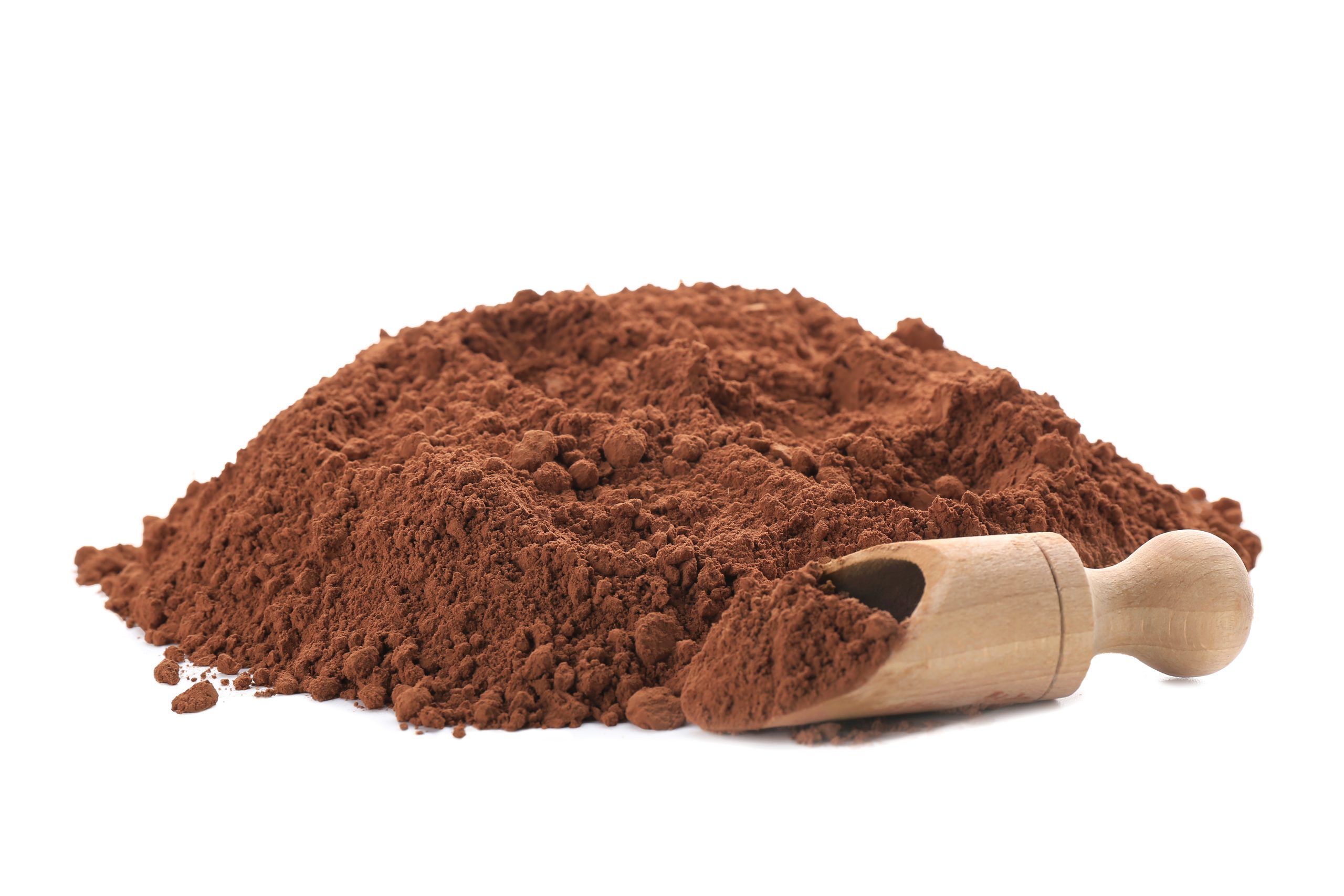
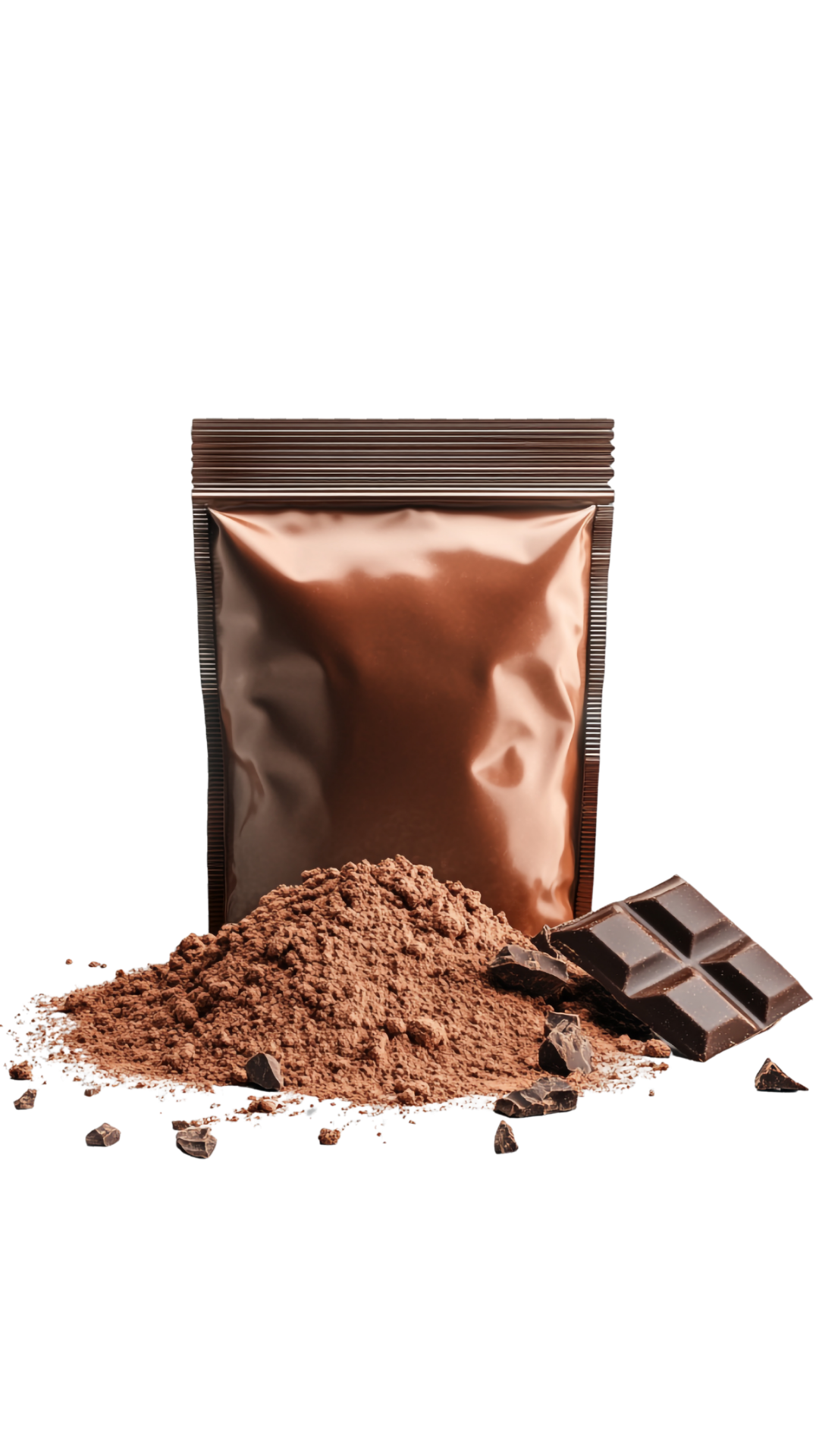
Types of Cocoa Powder Packaging
The choice of cocoa powder packaging depends on several factors, including storage duration, transportation conditions, export routes, climate, and the product’s intended application.
In the food industry, packaging must not only preserve product quality but also facilitate efficient handling, storage, and compliance with food safety requirements.
The most commonly used cocoa powder packaging solutions include:
1. Multiwall Kraft Paper Bags with Inner Liner
Multiwall kraft paper bags are among the most widely used packaging solutions for industrial cocoa powder and are typically available in 20–25 kg sizes.
A common structure consists of:
Multiwall Kraft Paper / Food-Grade PE Liner
The outer kraft paper layers provide mechanical strength, tear resistance, and durability during palletizing and transportation.
The inner food-grade polyethylene (PE) liner protects the product by minimizing moisture ingress, preventing direct contact between cocoa powder and paper, and reducing the transfer of external odors.
Although kraft paper is widely used because of its strength and recyclability, direct food contact requires careful material selection and appropriate protective layers.
2. Laminated Packaging
Laminated packaging combines multiple material layers, each designed to deliver a specific function such as moisture resistance, oxygen protection, or mechanical strength.
Typical structures include:
- PET / PE
- PET / Aluminum Foil / PE
Its main advantages include:
- Superior moisture and oxygen barrier performance
- Better preservation of aroma and flavor
- Excellent protection during long-distance transportation
- High-quality printability
This type of packaging is particularly suitable for products requiring long shelf life or international shipping.
3. Metallized and Aluminum Barrier Packaging
For more demanding applications, packaging incorporating metallic barrier layers is commonly used.
Typical options include:
- Metallized PET
- Aluminum Foil Laminate
These structures provide outstanding protection against light, oxygen, and water vapor, helping preserve the sensory and functional properties of cocoa powder.
However, their higher cost and recycling challenges should also be considered.
What is the best packaging for cocoa powder?
The ideal packaging should protect cocoa powder from moisture, oxygen, light, and external contamination. For industrial applications, multiwall paper bags with a polyethylene liner or high-barrier laminated structures are among the most widely used solutions.
What Is the Most Common Packaging for Industrial Cocoa Powder?
Most cocoa powders supplied to the chocolate, dairy, bakery, and confectionery industries are packed in 25 kg industrial bags.
The most common structure consists of:
Outer Layer: Multiwall Kraft Paper
Inner Layer: Food-Grade Polyethylene Liner
This combination offers an excellent balance of mechanical strength, moisture protection, cost efficiency, and transportation performance, making it one of the industry standards throughout the global cocoa supply chain.
Common Mistakes When Choosing Cocoa Powder Packaging
Selecting Packaging Based Solely on Price
The least expensive option is not always the most cost-effective. Poor packaging can reduce shelf life, increase product losses, and compromise quality.
Ignoring Transportation Conditions
Packaging suitable for short-term storage may not perform adequately during ocean freight or in hot and humid climates.
Overlooking the End Application
Packaging should match the intended use of the cocoa powder.
For example, cocoa powder used in instant beverages requires enhanced moisture protection and dispersibility, whereas cocoa powder intended for premium chocolate products places greater emphasis on preserving color, aroma, and sensory quality.
Emerging Trends in Cocoa Powder Packaging
The food packaging industry is increasingly focusing on sustainability, reduced material consumption, and improved recyclability.
Major trends include:
Recyclable Packaging
Manufacturers are developing packaging structures that are easier to recycle after use.
Mono-Material Packaging
Instead of combining multiple materials, mono-material packaging uses a single polymer type, simplifying recycling while reducing material complexity.
Lightweight Packaging
Reducing packaging weight while maintaining excellent barrier performance has become a key objective in sustainable packaging design.
Food Packaging Standards for Cocoa Powder
In addition to protecting the product, cocoa powder packaging must comply with food safety requirements.
Packaging materials should:
- Be food-grade
- Be approved for direct food contact
- Be free from harmful migrating substances
- Comply with the regulations of the destination market
HACCP
HACCP helps identify and control hazards throughout the packaging process, including physical contamination, equipment hygiene, and package sealing integrity.
ISO 22000
ISO 22000 is an internationally recognized Food Safety Management System that enables organizations to identify, assess, and control food safety hazards throughout the supply chain.
BRCGS Packaging Materials
The BRCGS Packaging Materials Standard is specifically designed for manufacturers of food packaging materials. It covers raw material quality, manufacturing process control, hygiene management, and contamination risk prevention.
What is the shelf life of cocoa powder in proper packaging?
The shelf life of cocoa powder depends on factors such as product quality, fat content, packaging type, and storage conditions. High-barrier packaging combined with proper storage helps maintain product quality throughout its intended shelf life.
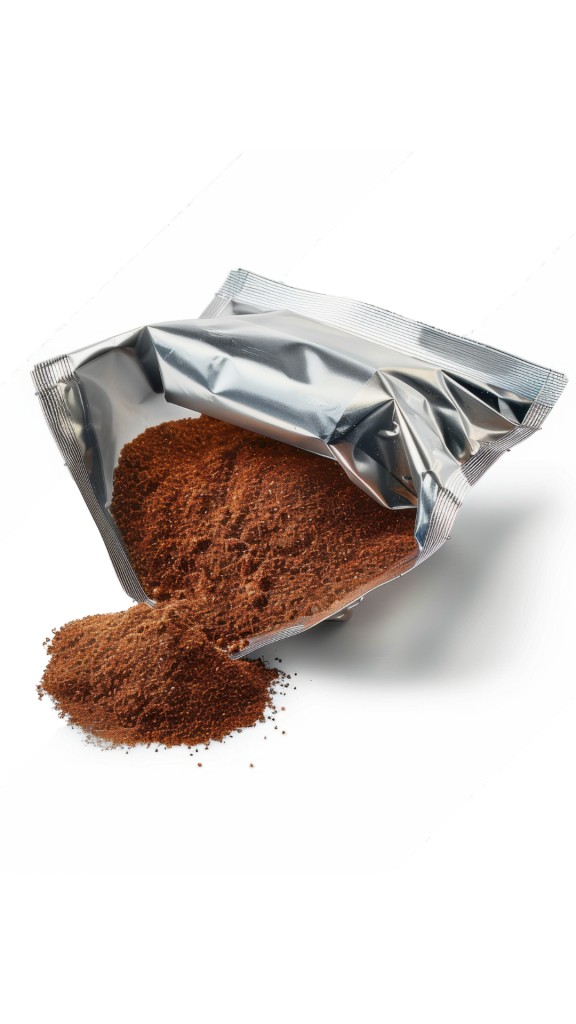
Proper Storage Conditions After Packaging
Even the highest-quality packaging cannot fully protect cocoa powder if storage conditions are inadequate.
To maintain product quality, the following storage practices are recommended.
Store in a Cool, Dry Environment
High humidity can lead to moisture absorption, caking, and reduced flowability.
Protect from Direct Sunlight
Extended exposure to light may negatively affect color and sensitive flavor compounds.
Keep Away from Strong Odors
Cocoa powder readily absorbs surrounding odors and should therefore be stored away from products with strong aromas.
Control Warehouse Temperature and Humidity
Elevated temperatures can negatively affect cocoa butter stability, aroma, and overall product quality.
Conclusion
Cocoa powder packaging is far more than a container for transportation it is an integral part of the product’s quality management system.
Selecting the appropriate packaging helps protect cocoa powder against undesirable changes in color, flavor, aroma, processing performance, and shelf life.
For manufacturers of chocolate, beverages, dairy products, bakery products, and confectionery, choosing the right packaging alongside the appropriate cocoa powder specifications is essential for minimizing production challenges and ensuring consistent quality in the final product.