
Chocolate Cheese and Cocoa Cheese: From Raw Materials to Production Process
In chocolate cheese formulation, a dairy cheese base primarily based on casein proteins, is combined with cocoa phases and sweetening agents to create a dessert-like product. From a food science perspective, this product is classified as a dairy dessert.
From a scientific viewpoint, this product can be considered a three-phase system consisting of:
- an aqueous phase (water and proteins),
- a fat phase (dairy fat and cocoa butter),
- and a solid phase (cocoa particles and sugar crystals).
The stability of this system strongly depends on the interaction between casein micelles, cocoa particle size distribution, and the functionality of emulsifiers. Any imbalance in these components may lead to defects such as fat separation, cocoa sedimentation, or textural instability.
Cocoa cheese typically exhibits the following characteristics:
- a smooth and creamy texture
- a balanced chocolate flavor profile
- good spreadability on bread and biscuits
- adequate stability under refrigerated conditions

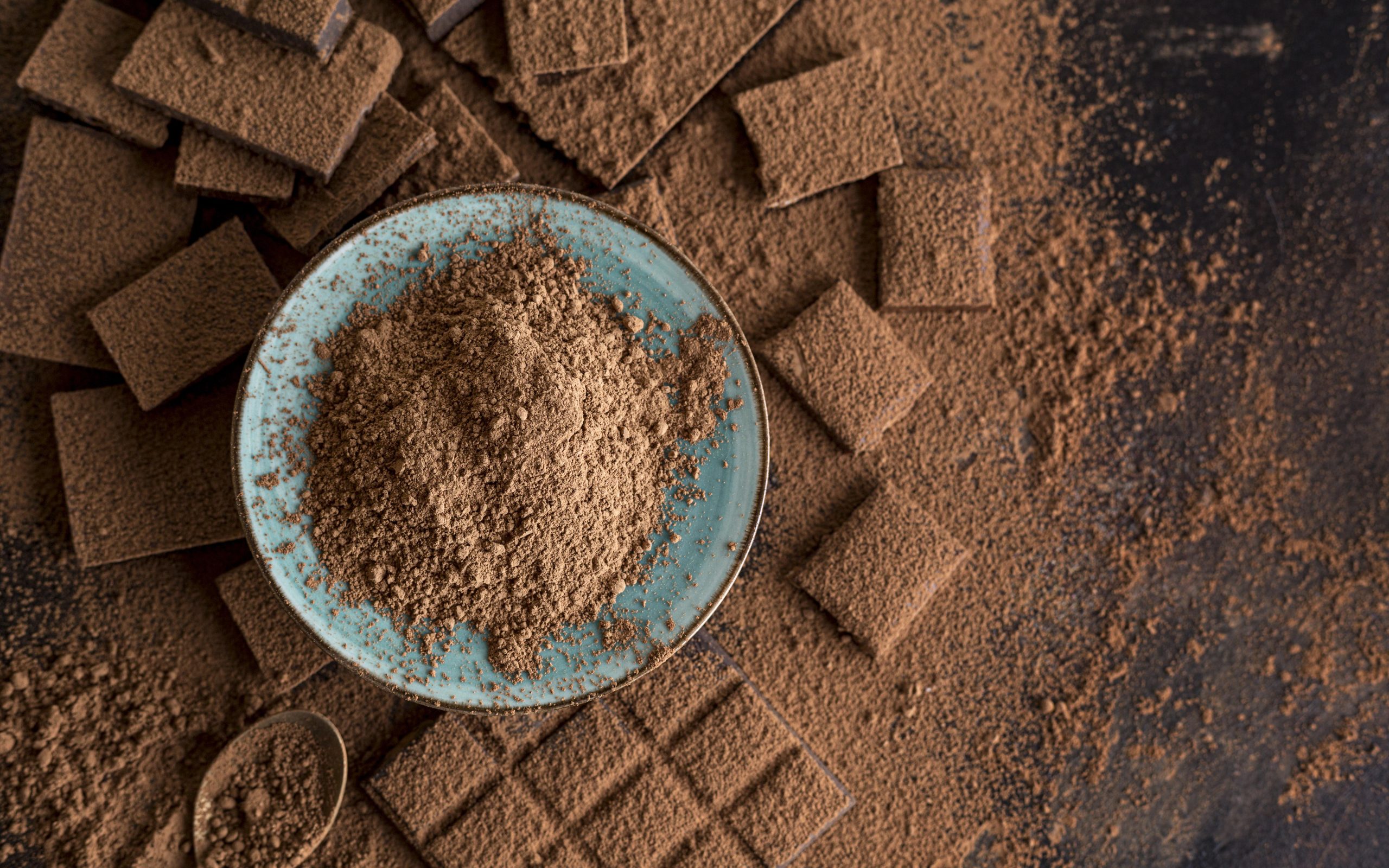
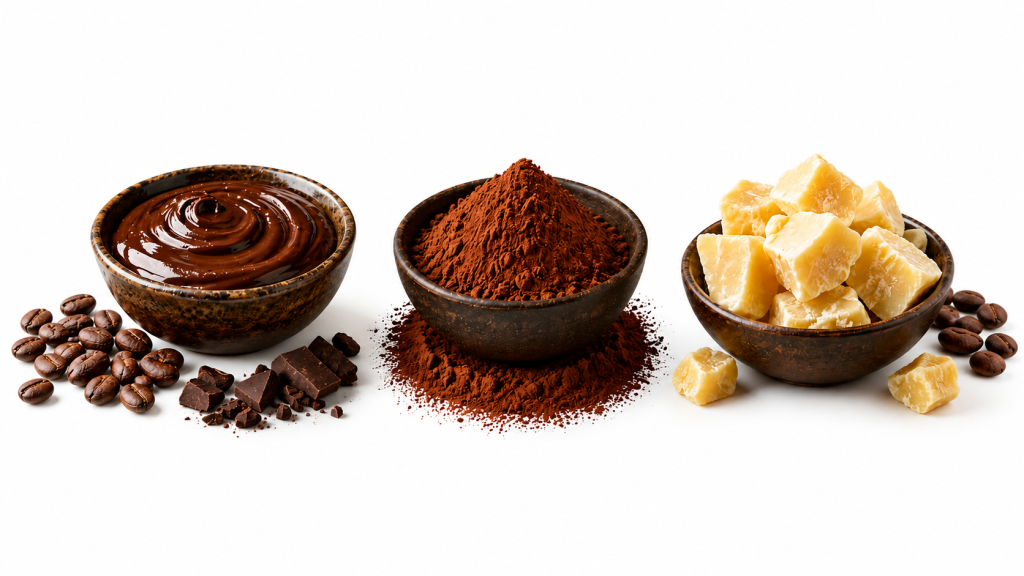
(Cocoa Powder)
In this system, cocoa powder acts as the main solid component, contributing to color development, chocolate flavor base, and increased system viscosity. Due to its fine particle size and low fat content, it remains mainly in the solid phase and significantly affects rheological properties such as viscosity and consistency. However, excessive use of cocoa powder may lead to a gritty texture and reduced sensory uniformity, making precise dosage and particle distribution control essential.
(Cocoa Mass)
Cocoa mass is a more complex ingredient composed of cocoa solids and cocoa butter. It plays an important role in enhancing flavor intensity and improving fat-phase structure. It increases chocolate flavor depth and supports emulsion stability by improving fat distribution. Its inclusion creates a better balance between solid and fat phases, enhancing structural integrity.
(Cocoa Butter)
Cocoa butter, on the other hand, is a key factor in controlling sensory and rheological properties. With a melting point close to body temperature, it provides a desirable melt-in-the-mouth sensation and improves creaminess and spreadability. However, excessive cocoa butter may destabilize the emulsion and cause fat separation, making precise formulation control essential.
Optimizing the cocoa phase in chocolate cream cheese is a key step in developing innovative dairy products, as final product quality strongly depends on the interaction between the casein protein network and the fat-cocoa phase.
Optimization of Cocoa Phase in Chocolate Cream Cheese Systems
With proper formulation design, it is possible to produce a product with high physical stability, uniform texture, and strong sensory acceptance, suitable for both industrial-scale production and consumer demand.
Market Opportunities, Flavor Innovation, and Technical Challenges
The chocolate cheese market has grown as part of the expanding dairy dessert category. Increasing demand for hybrid dairy-chocolate products has created significant opportunities, particularly in high-protein, reduced-sugar, and functional food segments.
From a market perspective, this product can serve as an alternative to traditional chocolate spreads and is positioned within the premium breakfast and snack category. Lifestyle changes, rising demand for convenience foods, and interest in nutritionally enhanced products are key market drivers. Additionally, the development of protein-enriched, low-fat, and sugar-free variants offers broad innovation potential.
Flavor innovation focuses on developing complex profiles such as chocolate combined with vanilla, coffee, or nuts. The use of cocoa varieties with different roasting levels, optimization of cocoa mass-to-butter ratios, and development of new textures (from creamy to semi-solid) are key innovation directions. Sensory design plays a crucial role in consumer acceptance.
Which cheese is best for chocolate formulation?
From a food technology perspective, mascarpone is considered the best option for premium formulations due to its high fat content, smooth texture, and neutral flavor, resulting in a creamier emulsion. However, cream cheese is the most widely used industrial base because of its cost efficiency, structural stability, and suitability for large-scale production.
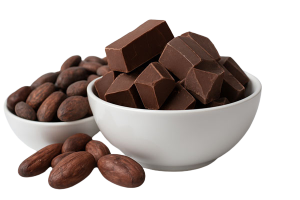
Cocoa mass: the foundation of chocolate’s aroma, color, and sensory identity
Difference Between Cocoa Mass and Cocoa Powder: Two Products from the Same Source
Production Process
In industrial manufacturing, the dairy phase—consisting of the cheese base, milk powder, and fats—is first prepared and standardized using emulsifiers. Cocoa-derived ingredients are then gradually incorporated into the mixture under controlled temperature conditions and high-shear mixing to form a uniform emulsion.
Subsequently, homogenization is applied to reduce particle size and improve system stability. The product is then subjected to heat treatment (typically 80–90°C) to ensure microbiological safety, and finally hot-filled into packaging to prevent secondary contamination.

Use of Emulsifiers, Stabilizers, and Emerging Technologies
Despite its potential, product development faces several technical challenges, including emulsion stability, fat separation, cocoa sedimentation, and long-term texture consistency.
The proper selection of emulsifiers and stabilizers, along with precise process control, is essential to overcome these challenges.
Emulsifiers such as sodium citrate and phosphates improve interactions between the aqueous and fat phases by modifying the surface charge of casein proteins, resulting in a stable emulsion and preventing oil separation.
Stabilizers such as guar gum and carrageenan increase the viscosity of the aqueous phase and form hydrocolloid networks that prevent particle sedimentation and maintain textural uniformity over time. These ingredients are especially important in high-fat or high-cocoa formulations.
Advanced processing technologies such as high-pressure homogenization, high-shear mixing, and precise
Nutritional Profile (Breakfast Application)
This product contains milk proteins (casein and whey), dairy fats, carbohydrates, and cocoa compounds, providing energy, essential amino acids, and improved sensory acceptance.
For children, it can serve as a quick energy and protein source, while for adults it can be part of a balanced breakfast, especially when combined with fiber-rich foods. The final nutritional value strongly depends on sugar content, fat type, and industrial formulation design.
Is chocolate cheese healthier than chocolate spread?
From a nutritional perspective, the main difference lies in fat source and protein content. Chocolate cheese typically contains dairy proteins (casein and whey) and milk fats, whereas chocolate spreads are usually based on vegetable fats (such as palm oil or hydrogenated oils) and high sugar content. Therefore, properly formulated chocolate cheese can offer higher protein content and the potential for reduced sugar formulations.
Conclusion
In recent years, the increasing demand for flavored dairy products and innovative desserts has created significant opportunities for the development of chocolate cheese products. At the same time, achieving a balance between desirable chocolate flavor, creamy texture, physical stability, nutritional value, and adequate shelf life remains one of the most important challenges for manufacturers.
Considering the growing trend of innovation in the dairy industry and the increasing consumer interest in novel and value-added products, chocolate cheese is expected to gain a more prominent position in the coming years within the dairy dessert market, breakfast products, and health-oriented formulations, becoming one of the most attractive areas for new product development in the food industry.