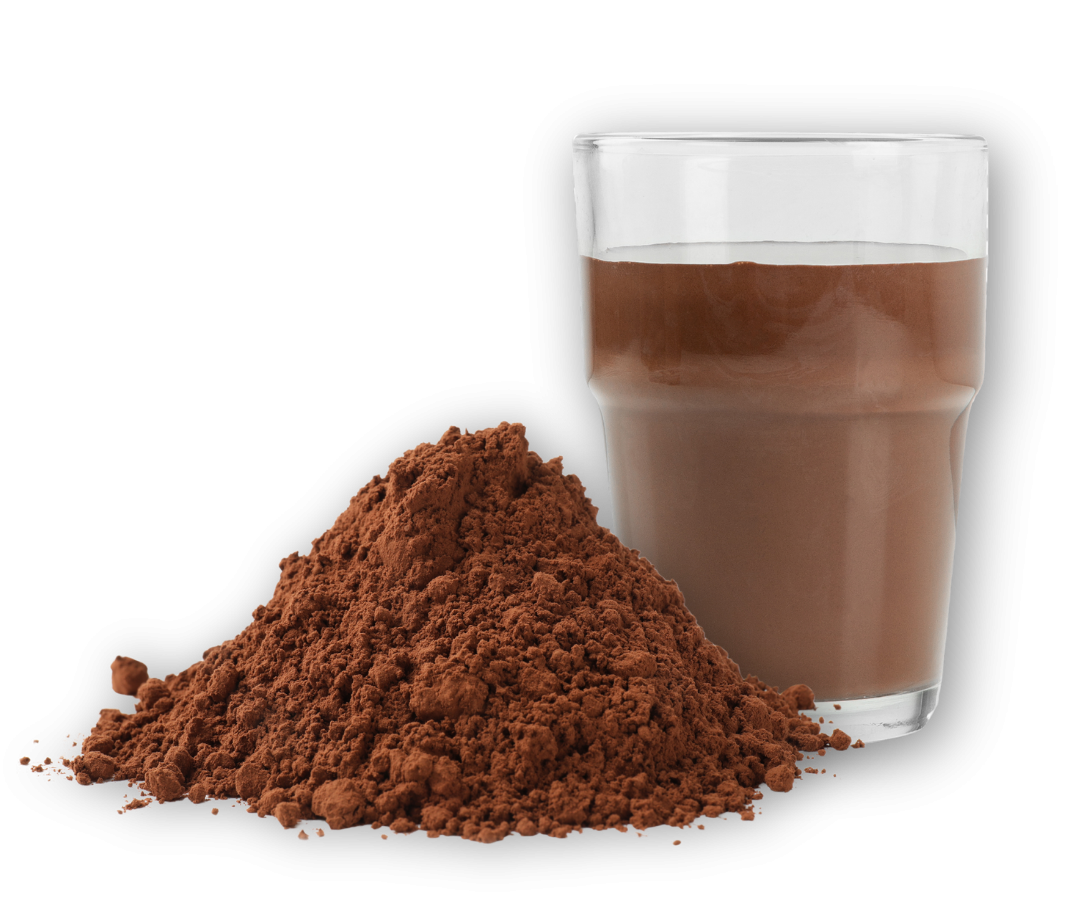

The Key Quality Criteria for Cocoa Powder in Dairy Products
Choosing cocoa powder in the dairy industry goes far beyond a simple matter of taste. Every quality parameter of this raw material can directly affect product stability, behavior during thermal processing, the consumer experience, and even food safety risks. Within the complex matrix of milk, cocoa powder interacts with proteins, fats, carbohydrates, and stabilizer systems interactions that, if the raw material falls outside standard limits, can at best reduce product quality and at worst lead to a product recall.
Cocoa powder quality is evaluated across the following dimensions:
- Microbial contamination
- Chemical contaminants
- Physical contamination
- Physicochemical properties

What Microbiological tests are required for cocoa powder?
To ensure the safety and hygienic quality of cocoa powder, a series of microbiological tests is performed on the product. These tests are specified in accordance with Iranian National Standard No. 3307 and include the following:
- Total microbial count (National Standard No. 5272)
- Escherichia coli count (National Standard No. 2947)
- Mold and yeast count (National Standard No. 10899-3)
- Salmonella detection (National Standard No. 1810)
- Enterobacteriaceae count (National Standard No. 2461-1)
Permissible Microbial Limits in Cocoa Powder :
The permissible microbial load in cocoa powder is not uniform across countries and is largely controlled based on internal industry guidelines. In Iran, the acceptance or rejection of a shipment is determined according to the limits specified in Iranian National Standard No. 12018.
- Total microbial count: 3 × 10³ CFU/g
- Escherichia coli: Negative
- Mold and yeast: 10² CFU/g
- Salmonella: Negative in 25 g
- Enterobacteriaceae: 10 CFU/g
Microbiological Analysis of Cocoa Powder :
During production—from bean fermentation through processing—cocoa powder is exposed to numerous sources of microbial contamination. Incomplete fermentation, drying under improper conditions, or cross-contamination along the processing line can elevate the microbial load to a level that poses a safety risk or causes premature spoilage in the final dairy product. In cases where the microorganism is heat-resistant, even the thermal processing applied to the finished product may not eliminate it.
Is the Microbial Load higher in alkalized or natural cocoa powder?
Alkalized cocoa powder typically has a lower microbial load than natural cocoa powder, because the alkalizing step carried out with heat and high pH reduces a portion of the microorganisms (particularly spore-formers, by roughly 2 logs). It should be noted, however, that the primary purpose of alkalization is to improve the sensory and technical properties of cocoa powder; the reduction in microbial load is merely a side effect of the process.
What Microbial Load Should Cocoa Powder Used in UHT and ESL Milk Have?
Cocoa powder used in UHT (ultra-high temperature) and ESL (extended shelf-life) milk must have the lowest possible microbial load, particularly the lowest possible count of heat-resistant spores. Unlike vegetative microbial cells, these spores can survive the UHT thermal process and are among the primary causes of spoilage in the final product.

Chemical Contaminants in Cocoa Powder
Heavy Metals in Cocoa Powder:
Cadmium occurs naturally in soil and is absorbed by the cocoa plant. Its concentration varies depending on the region and soil type; for example, soils of volcanic origin generally contain higher levels of cadmium. Lead contamination, on the other hand, may occur during cultivation, storage, or processing if proper controls are not maintained.
In chocolate products, the highest concentrations of lead are typically found in cocoa solids. As a result, dark chocolate, which contains a higher proportion of cocoa solids, generally exhibits higher lead levels than milk chocolate.
Fungal Contamination and Mycotoxins in Cocoa Powder:
Mycotoxins are toxic compounds produced by certain molds and are found worldwide in susceptible agricultural commodities. The most significant mycotoxin associated with cocoa is ochratoxin A (OTA).
OTA is produced by several Aspergillus species and develops primarily between harvest and fermentation of cocoa beans. Warm and humid conditions during transportation or storage can further increase the risk of contamination. Therefore, implementing proper post-harvest practices is essential for preventing mold growth and OTA formation.
Ochratoxin A has been associated with serious health effects, including kidney damage, and has been classified by the International Agency for Research on Cancer (IARC) as a possible human carcinogen.
Pesticide Residues in Cocoa Powder:
Depending on the growing region, various pesticides may be used during cultivation or storage. Residues of these compounds can remain in the final product and, in some cases, may lead to the rejection of an entire shipment if regulatory limits are exceeded.
According to Beckett’s Industrial Chocolate Manufacture and Use (2017), effective control of heavy metals, mycotoxins, and pesticide residues requires good agricultural, storage, and processing practices throughout the supply chain, as the primary sources of these contaminants are soil conditions, environmental factors, and post-harvest handling.
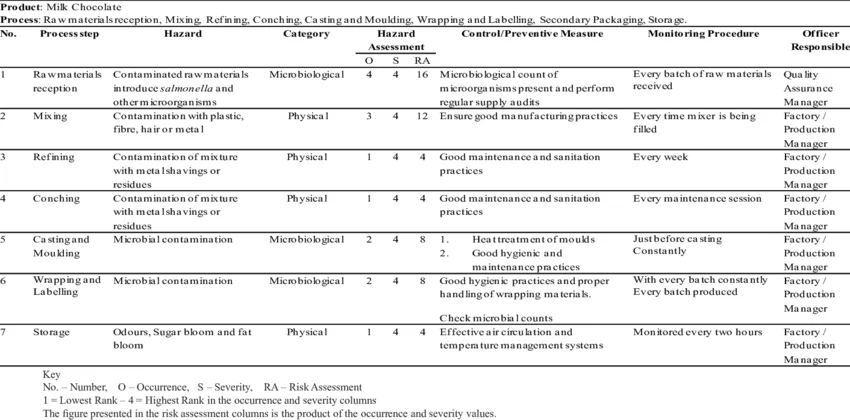
Physical Contamination in Cocoa Powder and How to Control It :
Physical hazards are among the most common risks in cocoa processing. These hazards may result from contamination of raw materials, contamination introduced during processing, or deficiencies in prerequisite programs and hygiene controls.
Sources of physical contamination vary throughout the production chain. During the reception of cocoa pods, potential contaminants include wood fragments, straw, husks, plant debris, and pests such as insects or larvae. During pod breaking and subsequent processing stages, additional risks may arise from metal fragments, equipment wear, or operator-related contamination.
To control these hazards, detection and separation measures are implemented at critical control points (CCPs). Metal detection is one of the most important control steps, while other preventive measures include raw material inspection, equipment maintenance, and the use of hygienic processing practices.
These controls are managed within the framework of the Hazard Analysis and Critical Control Points (HACCP) system, which plays a critical role in identifying, monitoring, and preventing contamination before it affects the final product.
pH and Product Stability
The pH of cocoa powder typically ranges from 5.0 to 5.8 for natural cocoa and from 6.0 to 8.0 for alkalized cocoa.
- Owing to its lower pH, natural cocoa is closer to the isoelectric point of casein and may reduce the stability of milk proteins.
- The type of alkalization and the concentration of cocoa powder influence its interaction with milk proteins.
- These factors ultimately affect the viscosity, consistency, and stability of the final dairy product.
Moisture Content
Low moisture is essential for storage stability and for preventing caking and mold growth.
- Increased moisture raises the risk of caking and reduces dispersibility in milk.
- High moisture creates favorable conditions for mold growth and increases the risk of microbial spoilage.
Ash Content
If the ash content exceeds the standard limit, it may indicate excessive use of alkalizing agents, which can lead to:
- An undesirable soapy or alkaline taste
- Deviation from technical specifications
Fat Content
Cocoa powder contains between 10 and 24 percent fat, and its fat content, alkalinity, and color all influence the physical and sensory properties of the final product. Based on fat content, cocoa powder is commercially classified as low-fat (10–12%), medium-fat (12.1–20%), and high-fat (20.1–24%).
When fat content is too high:
- The risk of cream-line formation increases.
- The likelihood of fat separation rises.
Particle Size
According to the standard, approximately 99.7% ± 0.2% of cocoa powder must pass through a 200-mesh sieve (75-micron openings), while the proportion of particles retained on the sieve (coarse fraction) should not exceed 0.5% by weight.
Finer cocoa powder disperses more easily in liquid systems. A controlled and fine particle size improves the texture of the final product, reduces sedimentation, and enhances mouthfeel, uniformity, and overall beverage quality.
Color
The type of cocoa powder directly determines the color of dairy products. Natural cocoa produces a lighter, reddish-brown color, while alkalized cocoa results in a darker and deeper tone.
This difference is clearly observed in chocolate milk, ice cream, and desserts, as the milk and fat matrix influences both color intensity and hue. In practice, higher fat content tends to soften the perceived color and give it a more matte appearance. Milk proteins help maintain particle suspension and reduce color instability, which is why hydrocolloids and texture regulators are also commonly used in formulation.
The physicochemical properties of cocoa powder determine its behavior within the dairy matrix and directly influence the color, flavor, rheological characteristics, and overall stability of the final product.
How Do the Physicochemical Properties of Cocoa Powder Affect Dairy Products?
Hazard Analysis and Control Measures in the Milk Chocolate Production Process Based on HACCP Principles

Quality Cocoa Powder, the Starting Point of a High-Quality Product
Cocoa powder is not merely a flavoring ingredient; its quality directly affects the safety, stability, and overall quality of dairy products. Compliance with microbiological, chemical, and physicochemical standards is a prerequisite for achieving the desired product performance in dairy applications.