1. Flavor Precursors of Biological Origin + Guided Selection Process
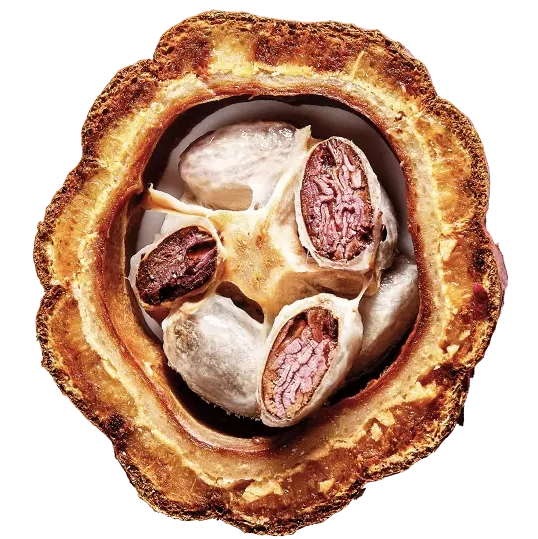
The cocoa beans selected for ruby chocolate production naturally contain a different chemical and biochemical profile compared to conventional cocoa beans.
These include :
Higher concentrations of specific flavor precursors
A distinct distribution of polyphenols
Organic acids that behave differently during fermentation and drying
However, it is important to clarify :
The final ruby flavor profile is not the result of a random discovery or an unknown natural phenomenon.
It emerges from targeted bean selection and guided internal reactions within a controlled industrial framework.
Only through controlled processing do these compounds develop into a stable, repeatable flavor profile.
2. Specialized Processing to Preserve Fruity Notes and Natural Acidity
In ruby chocolate production, several steps that are common in classic dark or milk chocolate processing are intentionally reduced, modified or omitted, such as:
Aggressive roasting
Prolonged high-temperature treatments
This deliberate processing approach prevents the loss of:
Volatile fruity compounds
Active organic acids
Aromatic precursors
As a result, compounds that are typically diminished in conventional chocolate remain intact and perceptible in ruby chocolate.
3. No Added Color or Flavor: Precise Process Control Instead
No artificial colorants or external flavoring agents are added during ruby chocolate production.
The pink color and fruity taste develop through:
Controlled fermentation
Precise pH management
Regulation of moisture and processing conditions
These parameters guide internal cocoa bean reactions that naturally generate ruby’s signature sensory characteristics.
Ruby chocolate’s distinctive flavor is not merely a sensory coincidence.
It is the result of combining selected biological characteristics of cocoa beans with a controlled, purpose-designed industrial process. Three core factors shape this difference :
1. Presence of Active and Sensitive Pigments in Cocoa Beans
Some cocoa beans used for ruby chocolate contain specific chromophores and polyphenolic compounds that, under controlled conditions, generate a pink to ruby-toned color.
These compounds are not present in all cocoa beans
Their presence depends on variety, origin, climate and genetics
The pigments become active through controlled oxidation or mild pH shifts
In classic chocolate processing, these compounds typically brown or degrade during intense heat treatment or alkalization
2. The Role of Process Control in Color Stabilization
To ensure that the pink color remains stable, multiple reaction pathways are carefully managed during ruby chocolate production:
Reactions that could shift color from pink to brown are controlled
Pigment degradation at high temperatures is prevented
pH is carefully managed to preserve the active color spectrum
Mild processing conditions limit excessive oxidation
The addition of ingredients such as milk solids may slightly influence pH and brightness, but this behavior is fully natural and predictable.
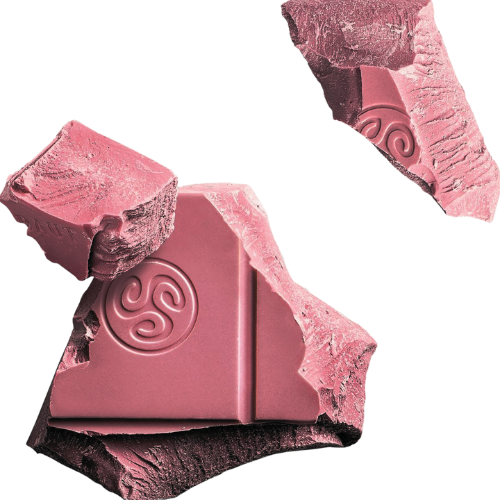
The pink color of ruby chocolate is the result of the behavior of naturally occurring pigments and sensitive compounds present in certain cocoa beans.
These compounds accumulate in the bean structure during growth and fruit ripening, creating a distinctive color spectrum.
Two key factors play a role in the formation and preservation of this color :
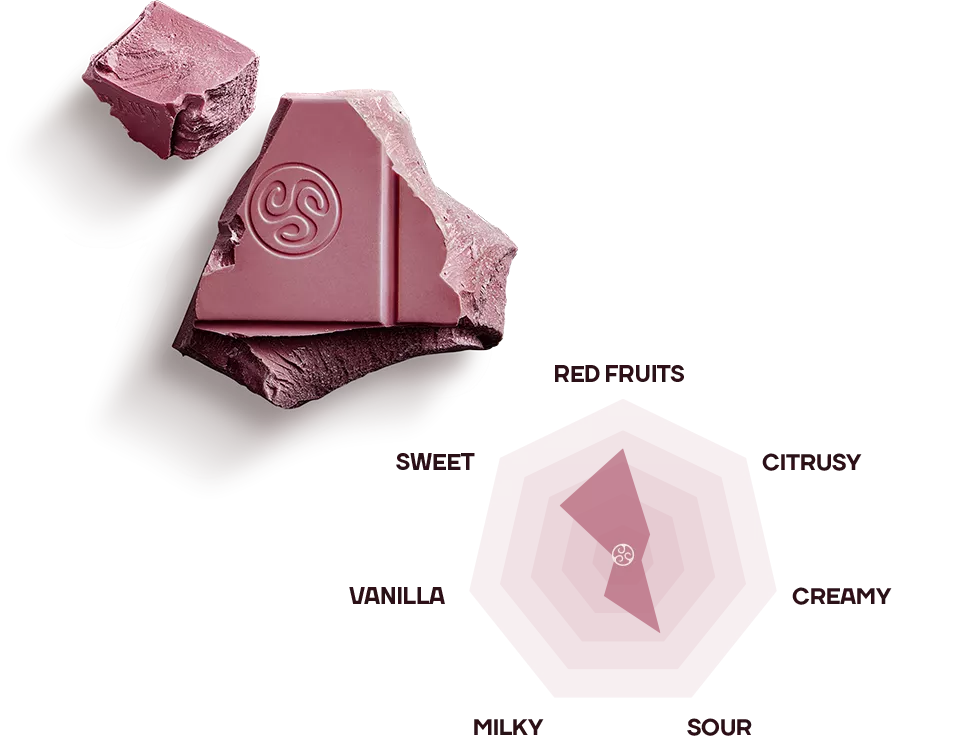
The flavor of ruby chocolate is a combination of pronounced fruity notes and a naturally occurring lactic acidity.
Its acidity falls within a spectrum reminiscent of berries, citrus and mild fermented notes.
This gentle acidity gives ruby chocolate a fresh and naturally fruit-forward sensation, clearly distinguishing it from conventional chocolate flavors.
Alongside these characteristics, ruby chocolate has a soft and smooth mouthfeel.
The balance between its natural acidity and texture creates a distinctive and harmonious flavor profile.
Together, these attributes result in a chocolate flavor that is neither similar to dark chocolate, nor milk chocolate, nor white chocolate.
Instead, ruby chocolate is recognized as an independent and new flavor profile.
This sensory profile is achieved without the use of artificial coloring and through controlled pH adjustments and precise processing of cocoa beans.
Ruby chocolate is recognized as the fourth type of chocolate, but it is not the result of discovering a new cocoa variety or a unique genetic trait in cocoa.
The fruity flavor and pink color of ruby chocolate are the outcome of an engineered processing approach, not a newly discovered natural phenomenon. This result is achieved through the targeted selection of specific cocoa beans and the precise control of fermentation and chemical conditions (especially pH), allowing certain naturally present compounds in the beans to be preserved.
In this process:
Full fermentation, which typically leads to browning of cocoa beans, is deliberately limited.
Oxidation and enzymatic reactions are carefully controlled.
The pink color remains stable through controlled processing, without the use of artificial colorants.
As a result, the fruity flavor and pink appearance of ruby chocolate should be understood as a process-driven outcome, not as evidence of a newly discovered cocoa species or a biological anomaly. Ruby chocolate remains a real chocolate made from cocoa, distinguished by a patented, controlled production process rather than a biological discovery.
Ruby chocolate is produced through a carefully engineered process designed to preserve the natural characteristics of selected cocoa beans.
Each stage is optimized to ensure that the fruity flavor, fresh acidity and color stability of the final product remain intact.
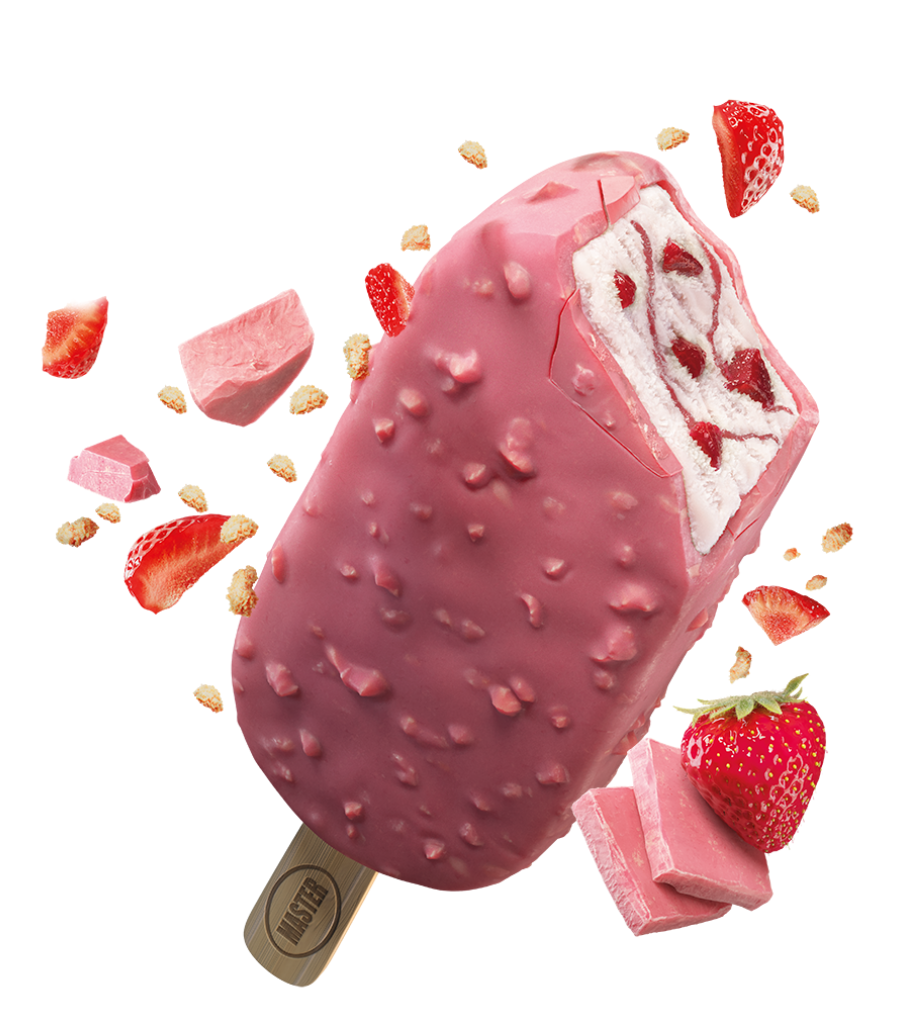
For ruby chocolate production, cocoa beans are selected based on their higher concentration of color- and flavor-active compounds. In their natural state, these beans typically:
Exhibit bright, fruity flavor notes
Provide a balanced and desirable level of natural acidity
Demonstrate stable behavior during processing
To achieve a consistent sensory profile, beans from different regions ( such as Latin America and West Africa ) are often blended.
Fermentation intensity and duration are precisely regulated to protect the beans’ inherent qualities. During this stage :
Temperature and humidity are closely managed
Over-fermentation is intentionally avoided
Bean acidity is kept within an optimal range
Unwanted reactions are limited
Result : flavor clarity is maintained and the original quality of the beans is preserved.
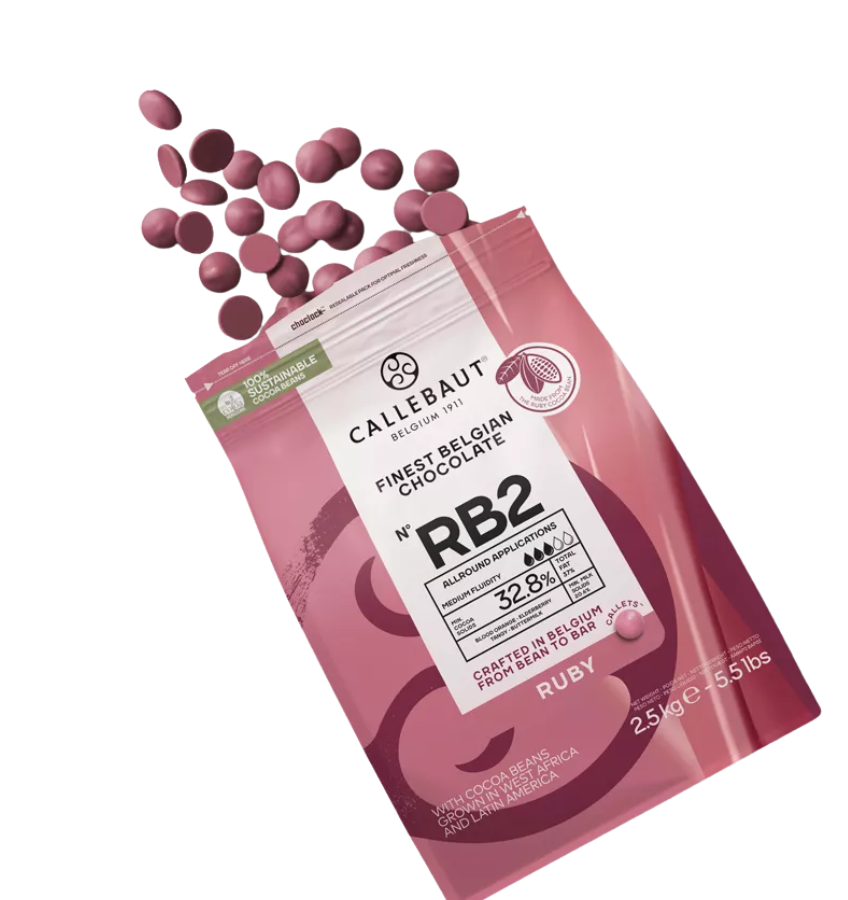
Drying is one of the most sensitive stages:
Temperature remains below defined thresholds
Direct light and strong oxidation are minimized
Drying speed is controlled to avoid pigment breakdown
Result : initial color stability and preservation of fruity acidic compounds.
During conversion from bean to cocoa mass:
Thermal and mechanical parameters are tightly regulated
Excessive heat exposure is avoided
Reactions leading to roasted or brown notes are limited
Acidity and fruity compounds are preserved
This stage defines the sensory and textural foundation of ruby chocolate.
After producing ruby cocoa mass :
Cocoa butter is added for proper texture and melting behavior
Dairy solids (lactose and milk proteins) typically account for ~20–26%, depending on formulation
Sugar balances natural acidity
Refining ensures smooth, uniform texture
Compared to classic chocolate, ruby conching :
Occurs at lower temperatures
Uses shorter processing times
Limits airflow to protect acidity
Avoids the formation of roasted flavor notes
This step stabilizes ruby’s fruity profile and smooth mouthfeel.
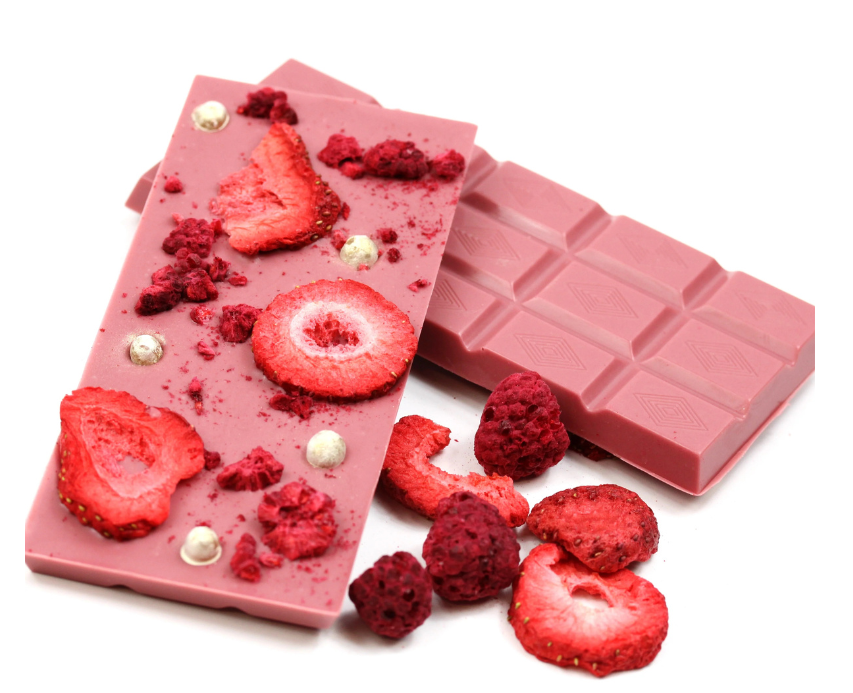
Proper tempering ensures :
Formation of stable cocoa butter crystals (Form V)
Glossy appearance and structural stability
Prevention of fat bloom
Consistent pink color retention
According to technical documentation :
Storage below 20 °C helps prevent color changes
Light exposure may cause gradual fading
Water-based fillings can alter pH and lighten color
Fat-based formulations provide better color stability
Molding for bars, tablets and shapes
Inclusions with nuts, dried fruits and spices
Panning for visually distinctive coated products
Praline and ganache applications without added flavoring
Compatible with light cakes and creamy fillings
Stable color without artificial pigments
Suitable for low-heat bakery applications

Used in hot and cold chocolate drinks
Ruby-based sauces for frozen desserts
Natural color and balanced melting behavior in ice cream
Ruby’s color and flavor make it especially suitable for experience-driven premium products.
Thanks to its balanced acidity, fruity profile and natural color, ruby chocolate is suitable for a wide range of professional applications.

Over a century of expertise in professional chocolate making ; a trusted choice for pastry chefs and leading brands worldwide.
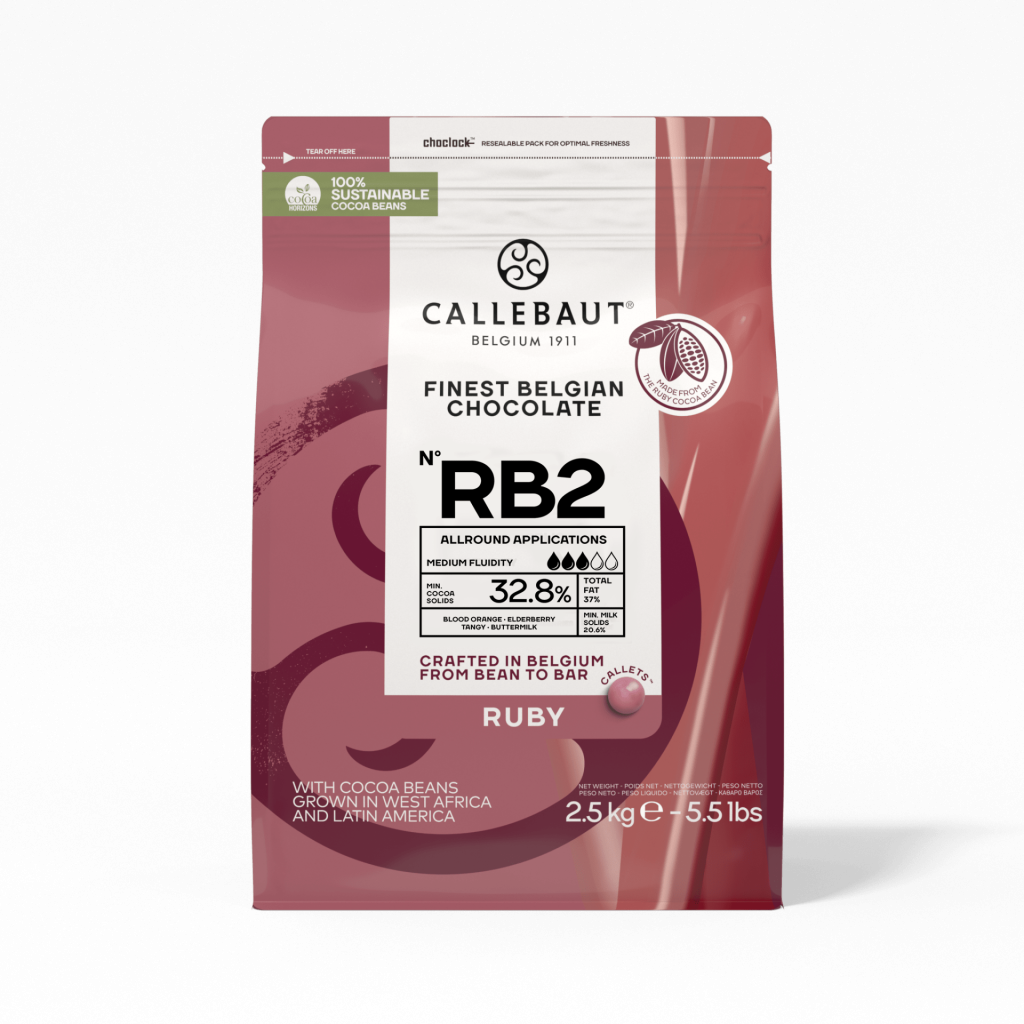
One of the key criteria for evaluating the quality of ruby chocolate is its base formulation and the proportion of its core components. This composition directly influences flavor intensity, texture and processing behavior across different applications.
Cocoa solids percentage
Determines flavor strength, structural depth and the balance between fruity acidity and chocolate body.
Fat content (especially cocoa butter)
Affects fluidity, melting behavior, moldability, surface gloss and overall processing performance. Chocolates with balanced fat content perform more consistently in professional applications.
Milk solids percentage
Contributes to a smoother mouthfeel, softens acidity and helps create a more rounded sensory experience.
In high-quality ruby chocolate, specific target ranges for cocoa solids, fat and milk components are carefully maintained. These values provide a reliable benchmark for comparing quality and predicting performance in both artisanal and industrial use.
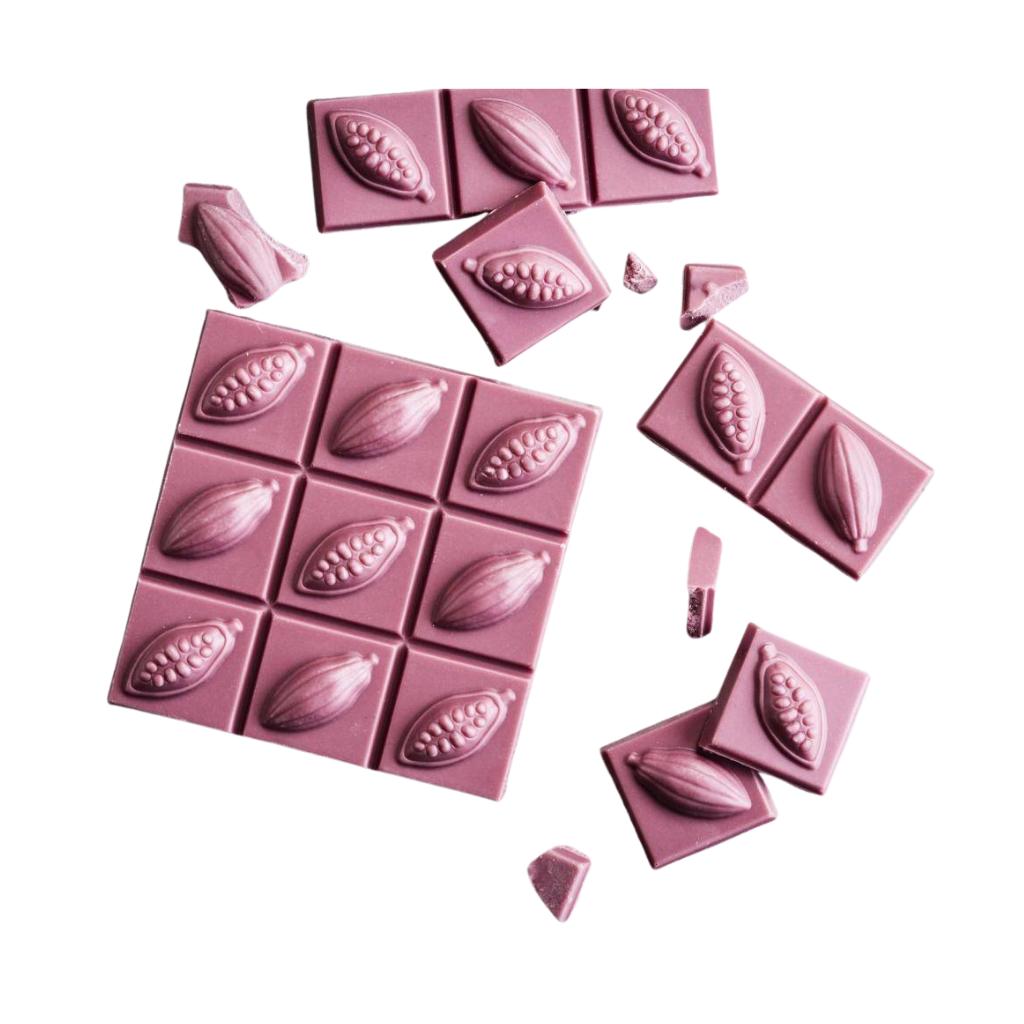
Ruby chocolate is not the result of discovering a new cocoa variety. Rather, it is produced through a formulated and engineered process based on targeted bean selection and precise control of bio-chemical conditions during fermentation and drying.
This approach enables the preservation of ruby chocolate’s natural pink color and fruity flavor profile without the use of added colorants or flavorings, while also delivering predictable processing behavior and stable sensory performance in professional applications.
In practice, the success of ruby chocolate is assessed not only by its flavor, but by how effectively it performs within the formulation and production process; where alignment between application requirements and processing behavior ultimately defines final quality.
درخواست شما توسط تیم تأمین مواد اولیه ما دریافت شده و در حال بررسی است.
در صورت نیاز به اطلاعات تکمیلی، با شما تماس گرفته خواهد شد.