The Role of Cocoa Mass in Flavor Stability of Chocolate Formulations


What Causes Flavor Fluctuations in Chocolate Production?
Flavor fluctuations in chocolate are not usually caused by changes in formulation. Their origin is more fundamental and lies in the quality and consistency of cocoa mass.
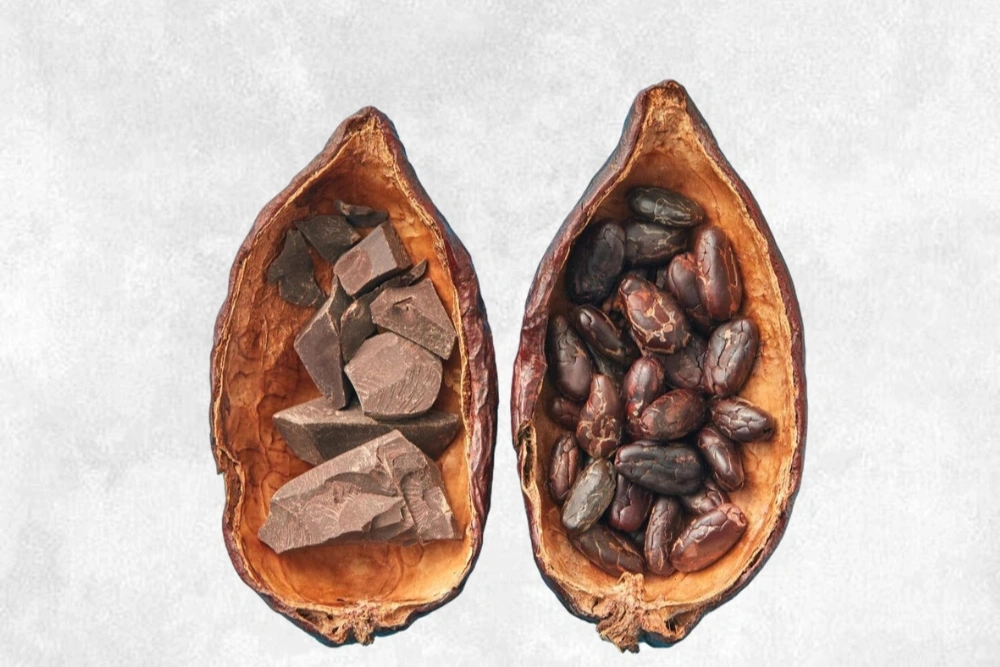
Cocoa mass is the direct source of cocoa flavor compounds and any variation in its characteristics has an immediate impact on the final taste of chocolate.
One of the primary causes of these fluctuations is the natural variability of cocoa beans in terms of origin, variety and growing conditions. These differences affect bitterness, acidity and flavor intensity in cocoa mass; even when the cocoa percentage and other formulation components remain unchanged.
Another important factor is instability in fermentation and drying processes. Incomplete or poorly controlled fermentation can result in the retention of undesirable compounds, leading to excessive bitterness, acidity or off-notes that cannot be corrected in later stages of chocolate production.
Finally, variations in cocoa butter content and solid particle composition in natural cocoa mass influence flavor intensity and mouthfeel. This explains why two chocolates with the same cocoa percentage can produce noticeably different sensory experiences.
As a result, flavor stability depends less on fixed formulations and more on the controllability of the flavor base. This is the point where cocoa mass becomes a decisive factor and where formulation strategies begin to differ.
Cocoa Mass: Where Aroma, Color and Chocolate Texture Begin
To better understand how cocoa mass shapes the sensory foundation of chocolate and why controlling it is essential for sensory stability ; Read this article.
- Related articles
Differences in Flavor Foundations: Cocoa Powder Based vs. Cocoa Mass Based Formulations
In chocolate formulations, the type of ingredient used as the flavor base plays a determining role in sensory behavior and overall flavor stability of the final product. Although both cocoa powder and cocoa mass are derived from cocoa beans, they behave fundamentally differently in terms of flavor distribution and responsiveness to formulation adjustments.
In cocoa powder based formulations, a significant portion of cocoa butter has been removed. As a result, flavor intensity and balance are more directly affected by small changes in sugar levels, added fats or processing conditions. For this reason, the sensory behavior of these formulations is more sensitive and highly dependent on precise formulation control.
In contrast, cocoa mass based formulations have an integrated flavor foundation in which flavor is distributed throughout the chocolate matrix. In this case, flavor does not function merely as an added component but is embedded within the overall structure and texture of the product.
The result of this difference is more uniform sensory behavior and reduced sensitivity to minor formulation fluctuations in cocoa mass based systems.
This distinction in flavor base behavior explains why two chocolates with the same cocoa percentage but different flavor foundations can deliver completely different sensory experiences and functional performance.
| Comparison Criterion | Cocoa Powder Based Formulation | Cocoa Mass Based Formulation |
|---|---|---|
|
Role of Flavor in Formulation |
Provides base color and basic flavor intensity |
Shapes the flavor profile and overall structure |
|
Flavor Distribution |
More concentrated and formulation-dependent |
More uniform due to natural fat presence |
|
Sensory Stability |
Suitable for simple and stable formulations |
Higher in sensitive formulations requiring flavor consistency |
An Integrated Flavor Matrix
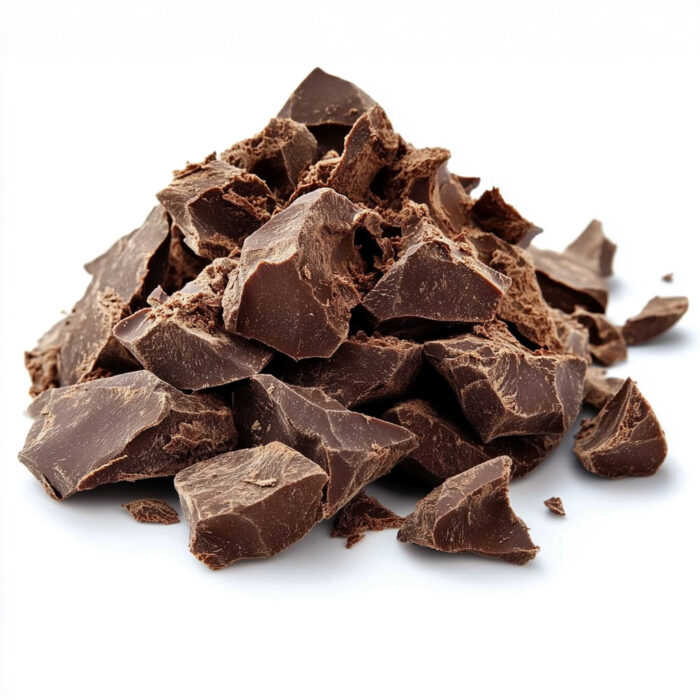
Because cocoa mass retains both cocoa solids and cocoa butter, it forms an integrated flavor matrix in which flavor compounds are distributed uniformly throughout the chocolate structure.
In this system, flavor is not confined to a specific added component but is present across the entire product matrix.
This uniform distribution reduces the impact of small changes in formulation components such as sugar or added fats, resulting in a more predictable flavor behavior compared to formulations built on simpler flavor bases.
Stabilized Flavor Reactions
In cocoa mass, a significant portion of the reactions that influence flavor occur before chocolate formulation, during cocoa fermentation and roasting. These stages act as a form of flavor pre-processing, bringing flavor compounds into a relative balance.
When these reactions are carried out correctly and under control, fluctuations in sensory attributes during later production stages are significantly reduced.
For this reason, chocolates based on cocoa mass exhibit greater sensory stability and are less sensitive to momentary process adjustments compared to formulations that rely more heavily on real-time control.
In other words, flavor in cocoa mass is more fixed and preserved throughout the production pathway, rather than being shaped late in the process.
How Does Cocoa Mass Create Flavor Stability ?
In chocolates produced with cocoa mass as the base, flavor stability is not the result of a single factor. Instead, it emerges from a combination of structural and processing mechanisms that are established before the formulation enters the production line. This characteristic makes chocolate flavor less dependent on last-minute adjustments and sensitive formulation changes.
Is Cocoa Mass Alone Enough to Guarantee Chocolate Flavor Stability ?
Cocoa mass contributes to flavor stability only when it is used as part of a controlled formulation system.
If the cocoa mass source lacks consistency or its quality is unstable, this ingredient may not reduce flavor fluctuations and can even reproduce or amplify the same sensory variations. For cocoa mass to play an effective role in stabilizing flavor, the following conditions are essential:
-
Consistency of the cocoa mass source and its specifications
-
Process control before cocoa mass enters the formulation
-
Compatibility with other fat and solid components in the chocolate structure
Otherwise, cocoa mass alone cannot compensate for weaknesses in the formulation.
When Is Cocoa Mass the Right Choice for Flavor Stability ?
Flavor stability in chocolate becomes a strategic advantage when it goes beyond formulation fine-tuning and is embedded in the product’s flavor foundation. Under such conditions, choosing cocoa mass is no longer a secondary option but a core formulation decision.
Cocoa mass is the right choice when :
Sensory consistency across production batches is a production or brand requirement
Flavor fluctuations persist even with a fixed formulation
Process and raw material control are prioritized over last-minute flavor corrections
Under these conditions, cocoa mass functions as a decision-making foundation, limiting the range of flavor variability before the final stages of production.
By contrast, selecting cocoa mass without considering source consistency, fat composition compatibility, and integration with the formulation matrix cannot ensure flavor stability and may even reinforce existing fluctuations.
For this reason, when flavor stability becomes a decisive criterion, choosing cocoa mass is not merely a raw material selection but a formulation strategy.