
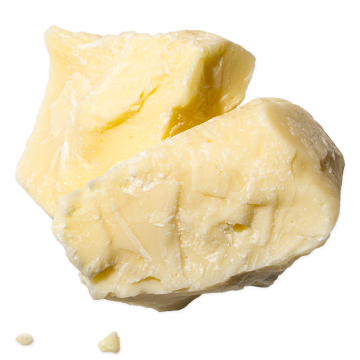
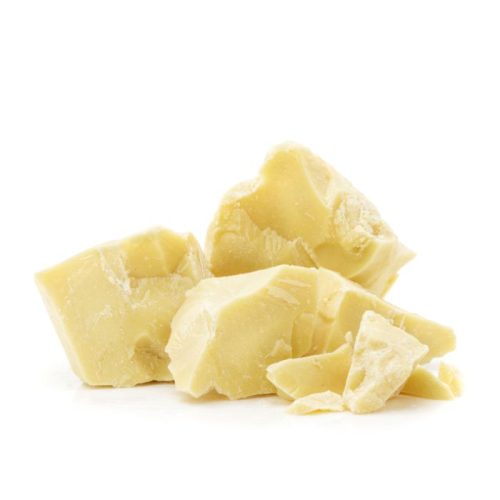
Deodorized cocoa butter is refined cocoa butter in which volatile aroma compounds are reduced through a controlled physical process, while the original fat structure and thermal behavior are preserved.
Many cocoa butter odor variations originate from increased levels of free fatty acids, which can develop under post-processing conditions or due to enzymatic activity. By reducing these compounds through mild polishing and deodorization ( without changing the fundamental fat characteristics ) cocoa butter becomes a cleaner and more controllable fat base for sensitive formulations.
Deodorized cocoa butter is a refined form of natural cocoa butter that remains similar in fat composition, triglyceride structure, and physical properties, but exhibits lower perceived aroma intensity due to the reduction of volatile compounds.
This type of cocoa butter, also referred to as deodorized or refined cocoa butter, does not show significant differences in fat composition or thermal behavior compared to standard cocoa butter. However, the reduced aroma intensity makes it more suitable for formulations where the natural cocoa aroma is not desired.
For this reason, deodorized cocoa butter is often used in products where flavor neutrality and broader formulation flexibility are required.
In the initial stage of cocoa processing, the beans must undergo thorough cleaning to remove impurities. Since the drying process often takes place directly on the ground, cocoa beans can contain unwanted materials such as sand, small stones, metal fragments, dried leaves, and other foreign particles.
These impurities must be completely eliminated before the beans proceed to subsequent stages to prevent equipment damage and ensure the quality and safety of the final cocoa butter.
After fermentation and drying, cocoa beans undergo a roasting process. This critical step releases the unique flavors locked within the beans and triggers chemical reactions that develop the characteristic aroma and taste of cocoa.
The temperature and duration of roasting must be carefully controlled. Over-roasting can lead to undesirable bitterness, while under-roasting prevents the full development of flavor and aroma compounds essential for high-quality cocoa butter and chocolate production.
Cocoa bean sterilization is a process in which beans are subjected to controlled temperature and time conditions, either in batch or continuous mode, using dry heat, moist heat, or steam. The primary objective of this operation is to significantly reduce the microbial load and eliminate potentially pathogenic microorganisms that may have been introduced during harvesting, fermentation, drying, or transportation.
This process is typically carried out prior to roasting to control microbial populations before exposure to high roasting temperatures, although it can also be applied post-roasting. Proper sterilization conditions reduce the microbial load of cocoa beans to levels considered safe and acceptable according to industrial standards.
After the roasting process, cocoa beans need to be separated from their hard outer shells. This step is performed through winnowing, where the outer husks are removed to isolate the inner part of the bean known as nibs.
Cocoa nibs contain both cocoa butter and cocoa solids, and they form the fundamental raw material for producing cocoa mass (cocoa liquor), which is the base for further cocoa butter extraction.
Cocoa nibs are fed into grinders where cocoa butter is extracted and combined with cocoa solids, resulting in the production of cocoa mass—a thick, dark, and viscous paste. During this stage, cocoa butter and solids are integrated seamlessly, forming cocoa mass that serves as the base for chocolate production.
Various types of grinding machines are used to process the nibs, and the choice of equipment depends on factors such as:
Desired particle size
Amount of free fat (cocoa butter) released
Type of final chocolate product
This grinding process has a significant impact on the consistency, viscosity, and texture of the cocoa mass, which ultimately influences the quality of the finished chocolate.
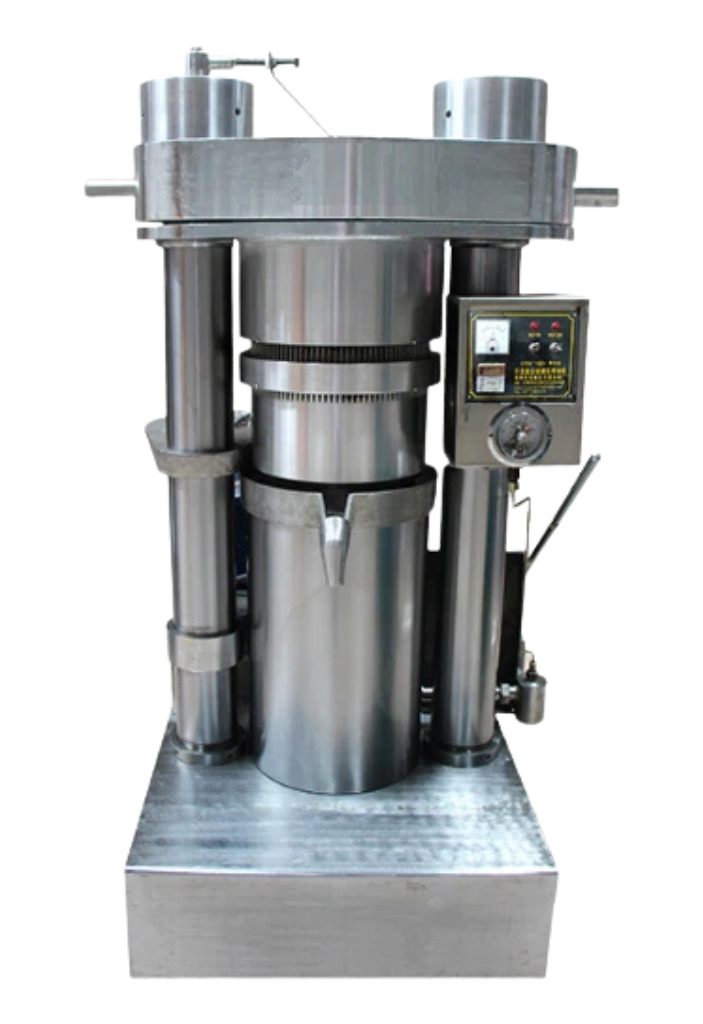
Cocoa mass is fed into a hydraulic press where it is subjected to high pressure (400 to 500 bar). This process effectively separates the cocoa butter (fat phase) from the cocoa cake (solid phase).
The extracted cocoa butter is a natural, pure fat that plays a vital role in determining the texture, flavor, and appearance of the final chocolate product. The remaining cocoa cake, in solid form, is typically ground to produce cocoa powder.
To further enhance its quality, the cocoa butter undergoes refining and deodorization processes. These steps help eliminate impurities and undesirable compounds, resulting in a higher purity, smoother flavor, and improved overall quality of the cocoa butter.
In the initial stage of cocoa processing, the beans must undergo thorough cleaning to remove impurities. Since the drying process often takes place directly on the ground, cocoa beans can contain unwanted materials such as sand, small stones, metal fragments, dried leaves, and other foreign particles.
These impurities must be completely eliminated before the beans proceed to subsequent stages to prevent equipment damage and ensure the quality and safety of the final cocoa butter.
After fermentation and drying, cocoa beans undergo a roasting process. This critical step releases the unique flavors locked within the beans and triggers chemical reactions that develop the characteristic aroma and taste of cocoa.
The temperature and duration of roasting must be carefully controlled. Over-roasting can lead to undesirable bitterness, while under-roasting prevents the full development of flavor and aroma compounds essential for high-quality cocoa butter and chocolate production.
Cocoa bean sterilization is a process in which beans are subjected to controlled temperature and time conditions, either in batch or continuous mode, using dry heat, moist heat, or steam. The primary objective of this operation is to significantly reduce the microbial load and eliminate potentially pathogenic microorganisms that may have been introduced during harvesting, fermentation, drying, or transportation.
This process is typically carried out prior to roasting to control microbial populations before exposure to high roasting temperatures, although it can also be applied post-roasting. Proper sterilization conditions reduce the microbial load of cocoa beans to levels considered safe and acceptable according to industrial standards.
After the roasting process, cocoa beans need to be separated from their hard outer shells. This step is performed through winnowing, where the outer husks are removed to isolate the inner part of the bean known as nibs.
Cocoa nibs contain both cocoa butter and cocoa solids, and they form the fundamental raw material for producing cocoa mass (cocoa liquor), which is the base for further cocoa butter extraction.
Cocoa nibs are fed into grinders where cocoa butter is extracted and combined with cocoa solids, resulting in the production of cocoa mass—a thick, dark, and viscous paste. During this stage, cocoa butter and solids are integrated seamlessly, forming cocoa mass that serves as the base for chocolate production.
Various types of grinding machines are used to process the nibs, and the choice of equipment depends on factors such as:
Desired particle size
Amount of free fat (cocoa butter) released
Type of final chocolate product
This grinding process has a significant impact on the consistency, viscosity, and texture of the cocoa mass, which ultimately influences the quality of the finished chocolate.
Cocoa mass is fed into a hydraulic press where it is subjected to high pressure (400 to 500 bar). This process effectively separates the cocoa butter (fat phase) from the cocoa cake (solid phase).
The extracted cocoa butter is a natural, pure fat that plays a vital role in determining the texture, flavor, and appearance of the final chocolate product. The remaining cocoa cake, in solid form, is typically ground to produce cocoa powder.
To further enhance its quality, the cocoa butter undergoes refining and deodorization processes. These steps help eliminate impurities and undesirable compounds, resulting in a higher purity, smoother flavor, and improved overall quality of the cocoa butter.
In cocoa butter deodorisation, the process is based on a clear functional separation between volatile components and the fat matrix, allowing aroma management without interfering with the lipid nature of the material.
During deodorisation, the proportion of volatile compounds is reduced, while the core triglyceride structure and dominant fat organization of cocoa butter are preserved. As a result, the effect of deodorisation is confined to the volatile fraction, and the lipid structure remains unchanged.
When properly controlled, deodorisation is carried out without causing meaningful changes to the lipid profile, triglyceride composition, or thermal behavior of cocoa butter. For this reason, the process is recognized as a quality management and formulation-compatibility tool rather than a chemical modification.
How Does Deodorization Affect the Performance of Cocoa Butter in the Final Product?
Once deodorization is carried out without altering the fundamental nature of the fat, its primary impact in the final product is reflected in improved consistency and stability of cocoa butter performance. In industrial applications, fat functionality is driven far more by physical behavior and formulation compatibility than by aroma.
By reducing unwanted volatile compounds, sensorial fluctuations that could influence the interaction of cocoa butter with other formulation components are minimized. As a result, fat performance in terms of texture, melting behavior, and overall product stability becomes more predictable and uniform; particularly in formulations that are sensitive to minor variations.
This functional stability enables the production of products with consistent quality across different batches, without the need for continuous formulation or process adjustments. For this reason, deodorization should be viewed not merely as a sensory intervention, but as a tool for controlling functional performance and industrial compatibility in the final product.
Cocoa butter is not deodorised to alter the fundamental nature of the fat. Rather, deodorisation is applied to control volatile compounds and improve the compatibility of cocoa butter with industrial formulation requirements. Naturally, cocoa butter contains a range of aroma-active volatile compounds, the composition and relative proportions of which can vary depending on post-harvest conditions, free fatty acid levels and upstream processing steps.
This inherent variability may lead to inconsistency in the perceived aroma profile, even though the dominant lipid profile and triglyceride composition remain largely unchanged.
In industrial production, such sensory variability is generally undesirable. By reducing unwanted volatile compounds, deodorisation transforms cocoa butter into a more neutral and sensorially controlled fat base. In many formulations, cocoa butter functions primarily as a structural or carrier fat, and the presence of volatile compounds can interfere with other ingredients in the formulation. Deodorisation limits this interference and enables improved formulation compatibility.
From an industrial perspective, this process also helps reduce batch-to-batch variability and supports consistent performance and quality. This is particularly important in applications requiring high stability and reproducibility, such as premium chocolate, cosmetic products and pharmaceutical formulations.
In certain chocolate and food products, precise flavor control is critical. In these applications, deodorized cocoa butter is used as a fat carrier with minimal sensory interference, allowing the final flavor profile of the product to remain well-defined and controllable.
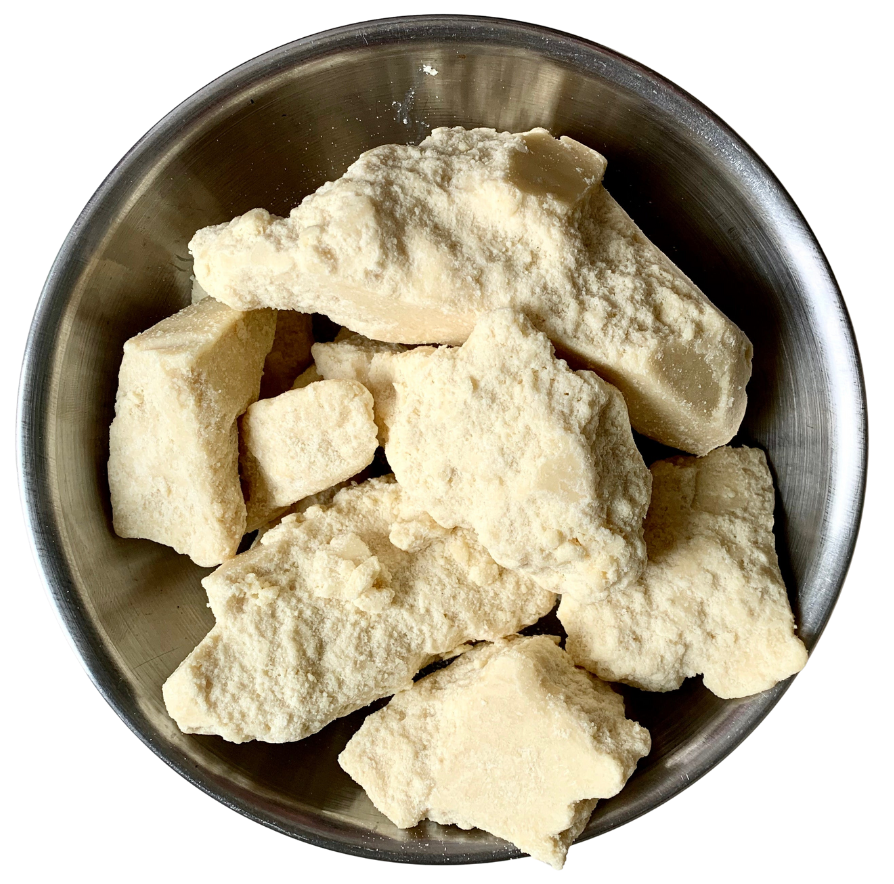
In cosmetic formulations, the presence of unwanted odors can negatively affect consumer experience. Due to its neutral sensory profile and stable physical behavior, deodorised cocoa butter is widely used in creams, balms and skincare products.
Deodorized cocoa butter is used in industries that require a neutral, stable fat base with high compatibility for sensitive formulations.
In selected pharmaceutical formulations, fats function as carriers or base materials. In such applications, stability, compatibility and the absence of sensory interference are essential; requirements effectively met by deodorized cocoa butter.

With over a century of expertise in professional chocolate production, Callebaut stands as a trusted partner for pastry chefs and leading brands worldwide.
The term PURE in describing cocoa butter refers to compositional purity or cocoa butter purity, highlighting the integrity of the lipid composition rather than the degree of processing or refining.
In this context, the product consists of 100% cocoa butter, containing no Cocoa Butter Equivalent (CBE), Cocoa Butter Replacer (CBR) or other non-cocoa fats.
Even small amounts of lipids from non-cocoa sources can alter the physical behavior of the fat phase ( including melting pattern, crystallization and formulation compatibility ) without necessarily being visually detectable.
Therefore, the term PURE simply indicates that the lipid composition of cocoa butter is maintained without blending and should not be confused with terms such as refined, processed or enhanced.
The term PRIME refers to a process-related feature in cocoa butter extraction, rather than a chemical classification or alteration of the fat’s inherent nature.
This term is typically used to describe extraction conditions in which pressure and temperature are more precisely controlled, ensuring the uniformity of the fat phase and reducing unwanted variability in physical properties.
Enhanced process control during extraction can produce cocoa butter whose functional performance remains more consistent across different production batches, without altering the natural fat structure or core composition.
This feature is particularly important in applications where fat performance stability ( such as melting, crystallization and interaction with other formulation components ) is a critical quality criterion.
The term PRESS refers to the mechanical extraction method of cocoa butter, in which fat is separated from cocoa mass through applied pressure, without the use of chemical solvents.
In this method, fat separation relies solely on physical forces, helping to maintain the lipid phase of cocoa butter free from unwanted components.
The result is a cocoa butter with more stable physical behavior during subsequent processing and improved compatibility with industrial manufacturing processes.
As previously mentioned, during deodorisation, a portion of the aroma-active volatile compounds is reduced to achieve a more neutral sensory profile. This process becomes particularly important when the natural aroma of these volatiles may interfere with the flavor, aroma or sensory attributes of the final product.
When deodorization is carried out properly and under controlled conditions, the core fat composition and thermal behavior of cocoa butter are effectively preserved. Under these circumstances, deodorization functions primarily as a tool for adjusting sensory and functional characteristics, rather than altering the fundamental nature of cocoa butter.
In describing certain types of cocoa butter, terms such as PURE PRIME PRESS DEODORISED are often encountered. This phrase encompasses a combination of production steps and technical characteristics, referring to the purity of the fat, extraction method, processing conditions and deodorisation status of the cocoa butter.
A clear understanding of each of these stages or components helps to distinguish between different types of cocoa butter in terms of functional performance, formulation compatibility, and industrial applications.
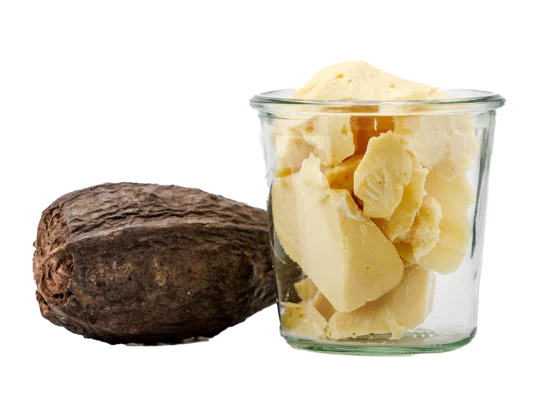
An in-depth look at the structure, functionality and role of cocoa butter in the food and chocolate industries.
Deodorised cocoa butter can be considered the result of deliberate adjustment of sensory and functional properties of pure cocoa butter. Its fat nature and thermal behavior are preserved, while the reduction of volatile compounds allows its use in formulations where aroma control, consistent performance and reproducible results are critical.
Understanding concepts such as fat phase purity, enhanced process control during extraction, mechanical extraction and controlled deodorisation helps to clarify functional differences between various types of cocoa butter.
Within this framework, Pure Prime Press Deodorised Cocoa Butter (DF 200) is specifically designed for applications that require a neutral sensory profile, stable performance and high formulation compatibility. Selecting this type of cocoa butter can make the product development process more predictable and controllable.
درخواست شما توسط تیم تأمین مواد اولیه ما دریافت شده و در حال بررسی است.
در صورت نیاز به اطلاعات تکمیلی، با شما تماس گرفته خواهد شد.